
ASWAN TO LUXOR
DAHABEYA NILE
CRUISE
Following the River of
Civilization
4-DAY
ITINERARY
THE HEART OF THE EXPERIENCE
This 4-day journey follows the Nile at its most intimate pace — sailing by traditional dahabiya between Aswan and Luxor. It is a route shaped by stillness, scale, and continuity, where monumental temples rise directly from the riverbanks and daily life unfolds unchanged along the shore.
Designed for travelers who value depth, privacy, and a quieter, more intentional way of encountering Egypt. The dahabeya’s small scale allows for a slower rhythm, close anchoring along the riverbanks, and a sense of intimacy that larger cruise ships cannot offer.
The journey functions as a coherent passage through Egypt’s central landscape, where river, architecture, mythology, and daily life intersect and continue to shape one another.
Between visits, the river itself becomes central: villages, palm groves, cultivated fields, and desert edges pass quietly alongside the boat, revealing how daily life and ancient belief have always existed in close relationship with the water.
The journey focuses on archaeological clarity, river life, and rhythm as a unified experience. Temples such as Philae, Kom Ombo, Edfu, Karnak, Luxor Temple, and the Valley of the Kings are explored not only for their architectural significance but for their placement within the Nile’s sacred geography.
THE GEOGRAPHY
ASWANPhilae Temple
Unfinished Obelisk
High Dam
KOM OMBODouble Temple of Sobek & Horus the Elder
EDFUTemple of Horus
LUXOR – EAST BANKKarnak Temple
Luxor Temple
LUXOR – WEST BANKValley of the Kings
Temple of Hatshepsut
Colossi of Memnon
SAILING ON A DAHABEYA
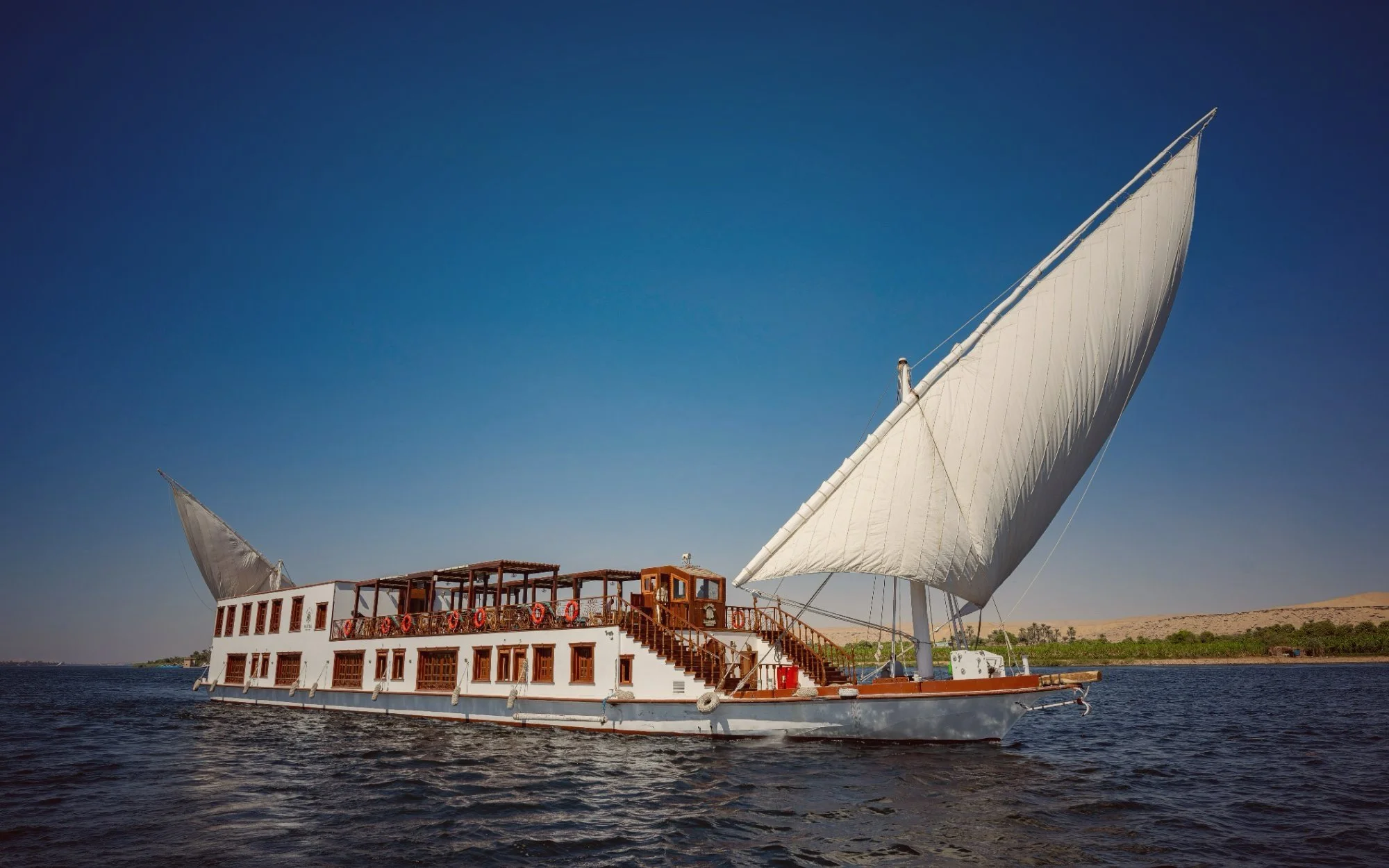
Sailing on a dahabeya is one of the most luxurious and authentic ways to experience the Nile between Aswan and Luxor. The word dahabeya comes from the Arabic word for gold (dahab), evoking the elegance and timeless beauty of these traditional two-masted sailing boats. Once favored by European elites exploring the Nile Valley in the 19th century, dahabeya today combine classic charm with modern comfort.
Dahabeyas can range in size from 3 to 12 cabins, making them perfectly suited for small groups, families, or travelers who value privacy and personalized service. This intimate style of travel creates a slower, more immersive journey — where every moment on the Nile feels both exclusive and deeply connected to its history.
What sets the dahabeya apart is its flexibility and intimacy. While larger Nile cruise ships offer a lively onboard atmosphere and a wide range of facilities, a dahabeya provides a calmer, more personal way to journey along the river. Because of its smaller size, it can anchor at tranquil riverbanks where big ships cannot, opening opportunities to explore hidden temples, wander through villages, or simply enjoy serene stretches of the Nile in peace.
Instead of docking directly in Luxor, the dahabeya typically moors in Esna — a quiet riverside town south of the city — allowing the sailing portion of the journey to unfold at a gentler pace. From Esna, all major Luxor sites are still accessed with ease, while the overall experience retains a sense of privacy, flow, and continuity that defines travel by dahabeya.
Another special feature is the stillness on board. Propelled by wind when conditions allow and gently guided by a distant tugboat when needed, the dahabeya moves without engine noise or vibration. It feels as if you are gliding over the water — listening only to the Nile lapping against the hull, the rustle of the sails, and the sounds of life along the riverbanks.
It is less about rushing from one landmark to the next and more about savoring the journey itself — watching the sunset over palm groves, sharing stories with your companions, and experiencing Egypt in a way that is private, elegant, and timeless. In many ways, a dahabeya voyage feels like stepping back into history, echoing the graceful style of travel enjoyed by 19th-century explorers and aristocrats along the Nile.
DETAILED ITINERARY
-
Overview
The journey begins in Aswan, Egypt’s southern gateway, where warm light, granite formations, and the steady presence of the Nile set a distinct tone. The day unfolds at a measured pace, introducing the dialogue between ancient craftsmanship and modern intervention that has shaped this region for centuries. From monumental engineering to sacred island temples, Aswan offers a composed and quietly powerful opening to the voyage.Itinerary
Pickup in Aswan – Airport or Your Hotel
Upon arrival in Aswan, you are met by your private driver and joined by your Egyptologist, whether at the airport or at your hotel. From the first moments, the shift in atmosphere is apparent — warmer light, granite landscapes, and the quieter rhythm that defines Upper Egypt. From here, the day’s visits begin, accompanied throughout and paced in harmony with the character of the region.Philae Temple
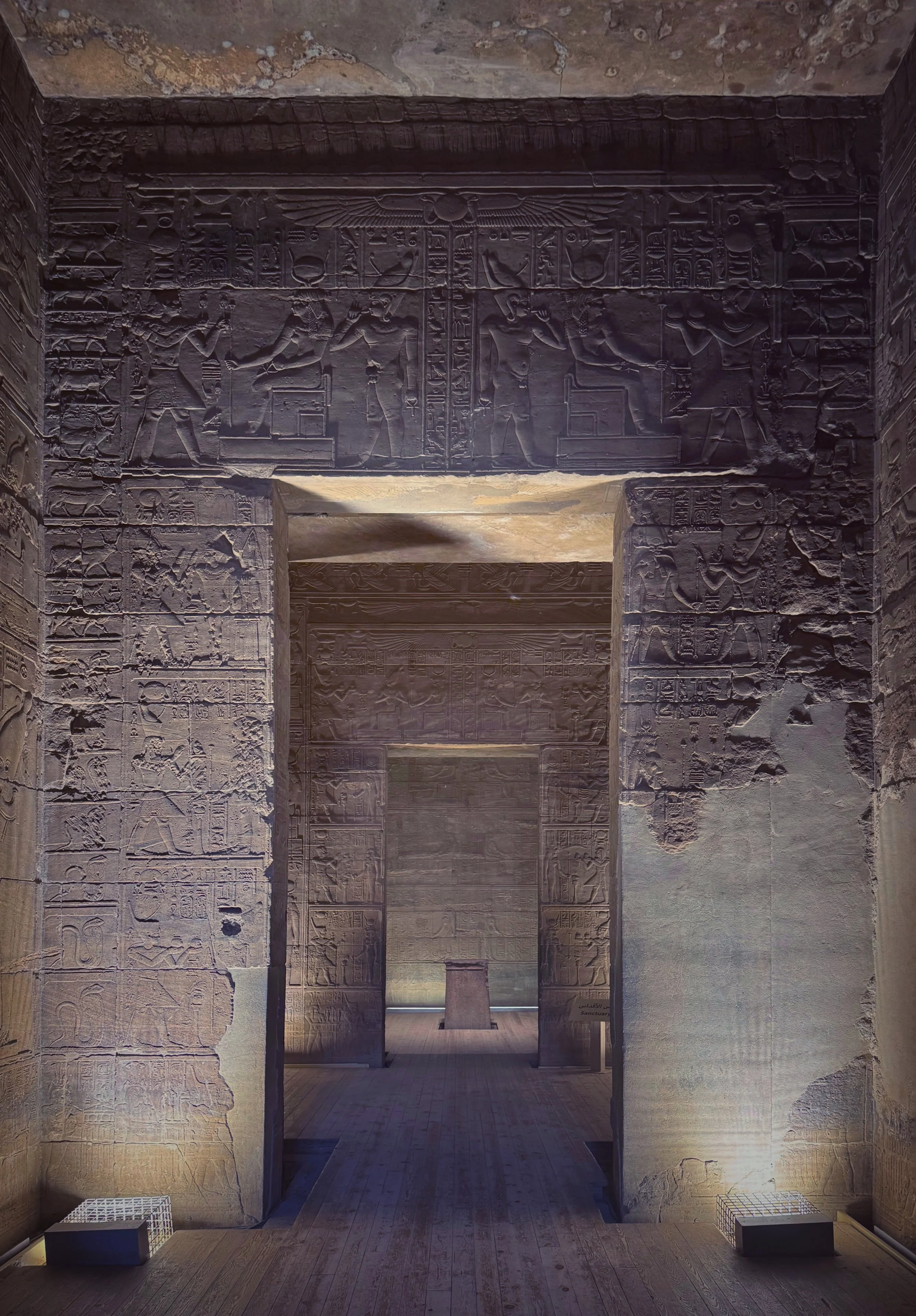
Begin your Aswan day with a boat ride to Philae, one of Egypt’s most atmospheric temple complexes. Approaching the island by water sets the tone: quiet, graceful, and anchored in centuries of devotion to Isis. Within its colonnades and inner courts, reliefs, sanctuaries, and chapels reflect a layered history that continued well into the Roman era. The setting — water, rock, and temple stone — creates a sense of clarity and stillness that makes Philae one of Upper Egypt’s most memorable sites.High Dam
Visit the High Dam, the modern project that reshaped Egypt’s water landscape in the 20th century. From the dam’s crest, take in the vast expanse of Lake Nasser and understand the role this structure plays in irrigation, electricity, and flood control — a striking contemporary counterpoint to the ancient world seen earlier in the day.Unfinished Obelisk
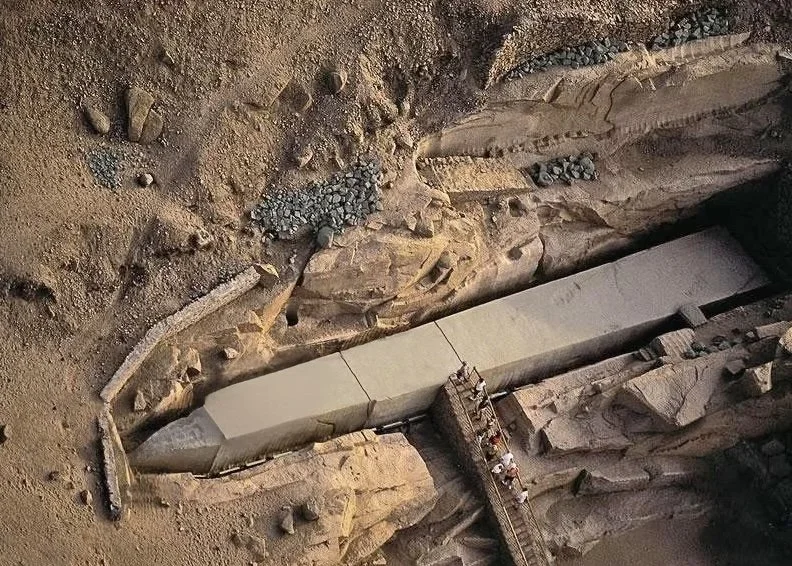
Continue to the granite quarries to see the Unfinished Obelisk, still embedded in the bedrock where ancient craftsmen worked. Its massive scale reveals how obelisks were carved directly from the stone, with tool marks and a natural crack showing precisely why this one was abandoned. The site offers a rare and tangible view into ancient engineering and the sheer physical demands of monumental construction.Dahabeya Embarkation
Board your dahabeya and check into your cabin. The shift from road visits to river life is immediate — quieter and slower. As the boat anchors or begins to move with the current, the Nile becomes the central axis of the journey, and the pace aligns naturally with the landscape.Optional Nubian Village Sunset Visit
Enjoy a scenic motorboat ride at sunset to a traditional Nubian village. Discover one of the Nile Valley’s oldest cultures, known for its brightly painted houses, rhythmic music, and warm hospitality.Meals: Breakfast, Lunch, Dinner
Overnight: Dahabeya Nile CruiseVisits:
• Philae Temple
• High Dam
• Unfinished Obelisk -
Overview
A day shaped by the slow rhythm of dahabeya travel, where the Nile becomes both backdrop and passageway between major Ptolemaic temples. As the boat moves north, the landscape alternates between cultivated riverbanks and wide, open stretches, creating a natural transition toward Kom Ombo and Edfu — two of Egypt’s most architecturally coherent and well-preserved temples. The day balances movement and depth: time on deck, immersive site visits, and the steady unfolding of river life from sunrise to evening.Itinerary
Arrival at Kom Ombo – On Foot from the Riverbank
The dahabeya moors directly beside Kom Ombo. From the riverbank, the temple is reached on foot — a short, level walk that keeps the transition from river to monument immediate and seamless.Kom Ombo Temple
Arrive at Kom Ombo, uniquely built as a perfectly symmetrical double temple dedicated to two deities: Sobek, the crocodile god associated with strength and fertility, and Horus the Elder, linked to protection and kingship. Twin entrances, twin halls, and twin sanctuaries reinforce this duality. Reliefs throughout the complex illustrate offerings, rituals, and — most famously —a set of carvings interpreted as ancient medical instruments, offering insight into Ptolemaic knowledge and practice. Its location directly on the riverbank adds a dramatic setting, especially in late afternoon light.Crocodile Museum
Step inside the Crocodile Museum, located directly beside the Kom Ombo Temple — a placement that reflects its close historical connection to the cult of Sobek. Inside, a carefully curated collection displays mummified crocodiles of varying sizes, votive offerings, and ritual artifacts once dedicated to the god. The museum bridges the environment, the temple, and ancient belief: the crocodiles that once inhabited this bend of the Nile, the inscriptions carved into the temple walls, and the everyday devotion of local communities all converge here in one clear, tangible narrative.Scenic Nile Sailing
Continue the journey by dahabeya along the Nile, with time to observe the quiet flow of daily life along the riverbanks. Palm groves, cultivated fields, small villages, fishing boats, and occasional desert ridges create a steady visual rhythm. Sailing on a dahabeya offers a slower, more intimate view of the Nile, allowing the landscape to unfold naturally and without haste.Transfer by Horse-Drawn Carriage
Upon arrival at the Edfu riverbank, transfer by traditional horse-drawn carriage through the town to the temple entrance. This short ride reflects the historic approach to the site and remains the customary way to reach the temple.Temple of Horus at Edfu
Explore the Temple of Horus, the best-preserved major temple in Egypt. Its monumental pylons, intact chambers, and sharply carved reliefs form an exceptional example of Ptolemaic religious architecture. Inside, scenes depict the mythological battles between Horus and Seth, ceremonial processions, and temple rituals that once animated this sanctuary. The scale, clarity, and completeness of the reliefs offer a rare opportunity to read stories and symbolism exactly as ancient visitors would have seen them.Return to Dahabeya
Reboard the dahabeya and settle into the calm rhythm of river life. As the boat anchors for the evening, the shift from monumental architecture to quiet riverbank surroundings marks a natural close to the day. Dinner and rest unfold in an atmosphere defined by stillness, open water, and the slow pace of the Nile.Meals: Breakfast, Lunch, Dinner
Overnight: Dahabeya Nile CruiseVisits:
• Kom Ombo Temple
• Crocodile Museum
• Edfu Temple -
Overview
Begin your exploration of Luxor’s East Bank — the ancient “land of the living,” where temples were raised to honor the gods, celebrate kingship, and mark the rhythms of both earthly and cosmic life. The day introduces the full scale of Thebes: the ceremonial city of Karnak, shaped across more than a thousand years, and the refined elegance of Luxor Temple, illuminated by royal patronage and religious processions.Itinerary
Morning Pickup – From Your Dahabeya
Begin the day with pickup from your dahabeya. Your guide and driver meet you at the riverbank and transfer you by private air-conditioned vehicle to Luxor’s East Bank sites.Karnak Temple Complex
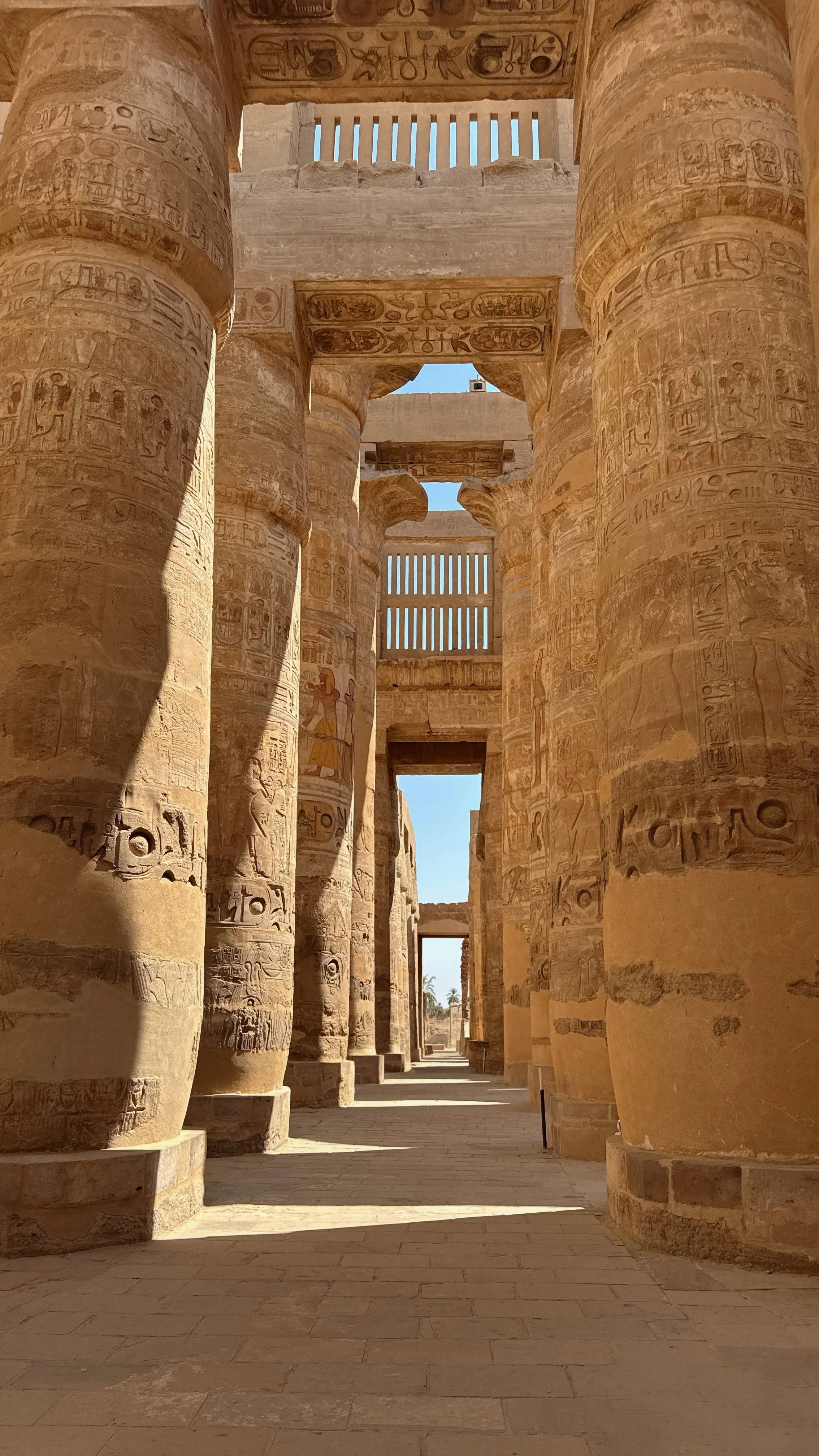
Explore the largest religious complex of ancient Egypt, dedicated primarily to Amun-Ra but expanded over more than 1,500 years by successive pharaohs. Karnak functions not as a single temple but as an immense ceremonial city — courtyards, obelisks, sanctuaries, sphinx-lined avenues, and monumental gateways. The Great Hypostyle Hall, with its 134 massive columns carved with hymns, royal names, and ritual scenes, remains one of the most powerful architectural spaces in the ancient world.Luxor Temple
Explore Luxor Temple, linked to Karnak by the ancient Avenue of the Sphinxes. Built by Amenhotep III and Ramesses II, this temple beautifully reflects the harmony of religion and royalty in ancient Egypt.Return to Dehabeya
After your visits, return to your dahabeya as the Nile settles into its evening rhythm. The river slows, light softens, and the boat becomes a quiet refuge at the water’s edge. Time to unwind on deck, enjoy dinner on board, and let the day’s impressions drift past with the current, preparing gently for the discoveries that await on the West Bank.Meals: Breakfast, Lunch, Dinner
Overnight: Dahabeya Nile CruiseVisits:
• Karnak Temple
• Luxor Temple -
Overview
This final morning on the West Bank brings together the core elements of New Kingdom legacy — royal tombs, cliffs shaped into sacred landscapes, and monuments that defined Egypt’s most powerful era. The day moves through the Valley of the Kings, the monumental terraces of Hatshepsut, and the silent guardianship of the Colossi of Memnon before shifting into a smooth departure rhythm. By the time you cross back to the East Bank for your private transfer to Luxor Airport, the arc of the journey feels complete: a last immersion in ancient Egypt followed by a calm, orderly transition toward onward travel.Itinerary
Morning Pickup – From Your Dahabeya
After breakfast and disembarkation, you are picked up by private vehicle and transferred to the West Bank, where your guide continues with the day’s exploration.Valley of the Kings
Enter the royal necropolis of the New Kingdom, where pharaohs were buried in elaborately decorated tombs carved deep into the desert cliffs. Inside, corridors and chambers are covered with scenes from sacred texts — celestial maps, gods, and rituals guiding the king toward rebirth and eternity. The Valley reveals both the spiritual imagination and technical mastery of ancient Egypt.— Notable tombs often open to visitors include those of
Ramses IV
Ramses III
Merenptah— Additional optional tombs available for visit
Tutankhamun
Ramesses V & VI
Seti I
AyTemple of Hatshepsut
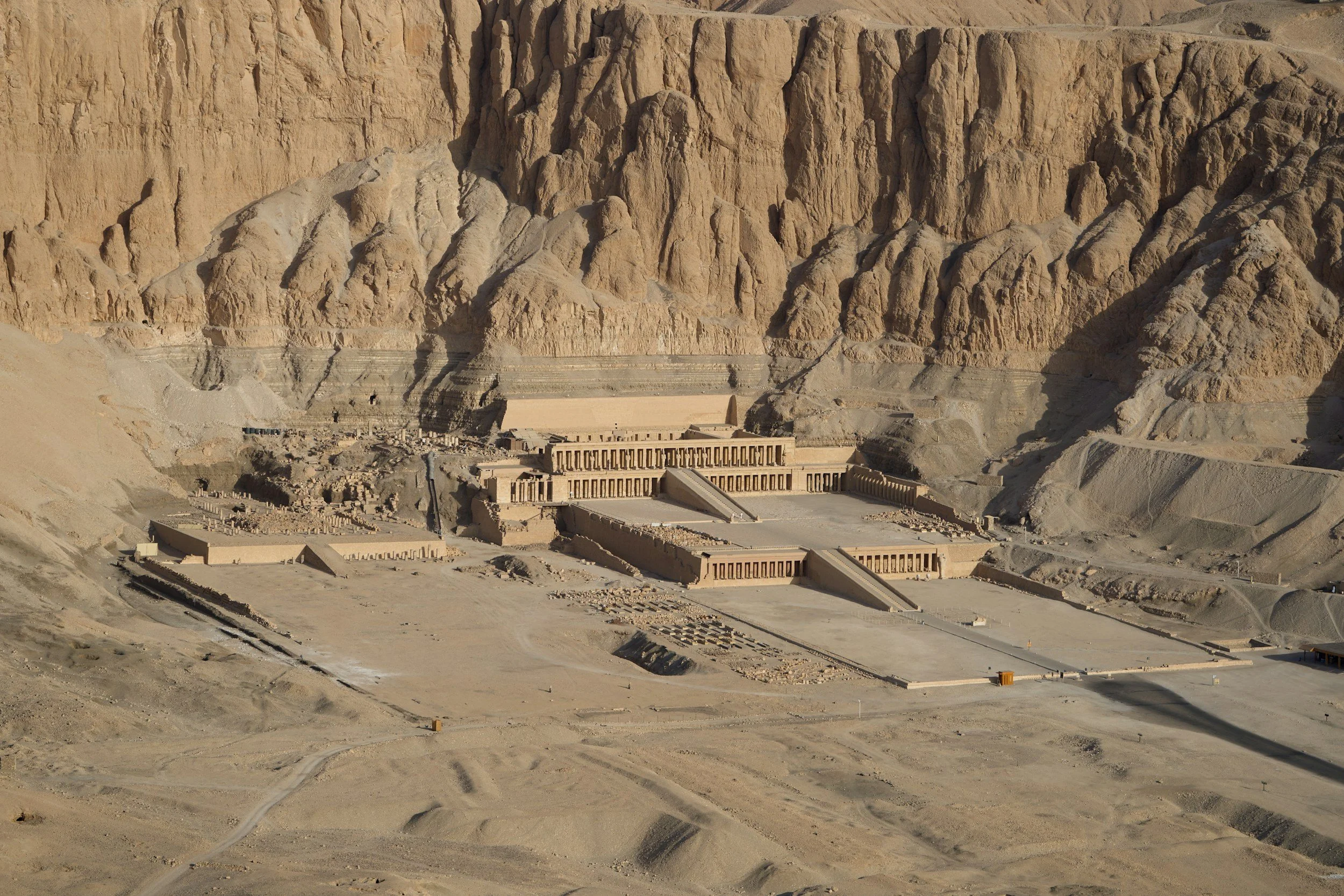
Carved directly into the limestone cliffs of Deir el-Bahari, this terraced masterpiece is a striking fusion of nature and architecture. Built to honor Egypt’s most powerful female pharaoh, the temple ascends in a series of colonnaded courts that mirror the vertical lines of the mountain behind it. Dedicated to the sun god Amun, its reliefs preserve the story of Hatshepsut’s divine birth and her legendary trade expedition to the Land of Punt, immortalizing a reign defined by prosperity and artistic innovation.Colossi of Memnon
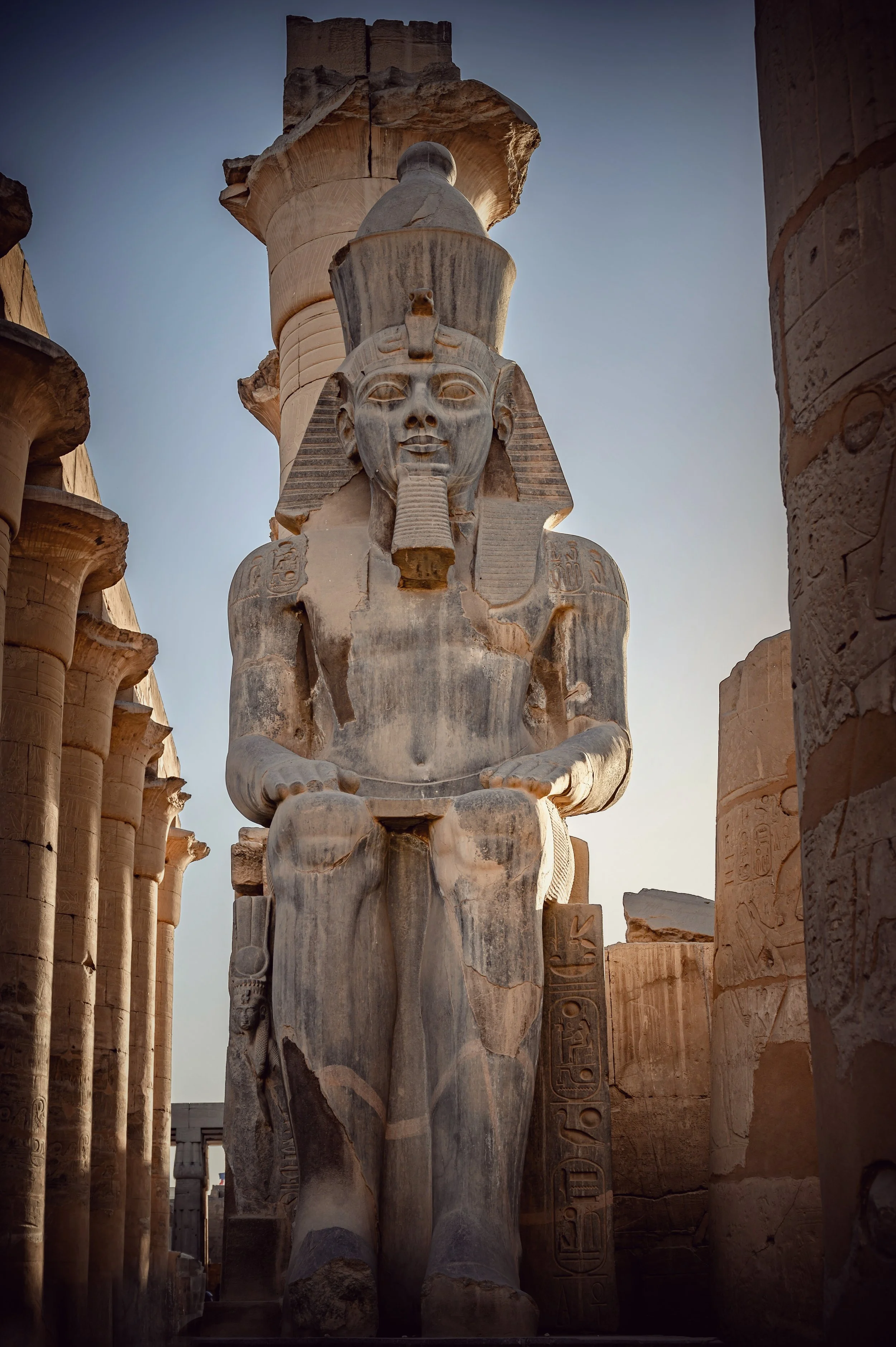
Stop at the 18-meter statues of Pharaoh Amenhotep III. Once guarding the entrance to his lost mortuary temple, these twin colossal figures have stood watch over the Theban plain for more than 3,400 years — silent witnesses to Egypt’s ancient grandeur.Transfer to Luxor Airport
A comfortable private transfer brings you from the West Bank to Luxor International Airport for your departure.Meals: Breakfast
Overnight: —Visits:
• Valley of the Kings
• Temple of Hatshepsut
• Colossi of Memnon
THE ROUTE ON THE MAP
INCLUSIONS
GUIDING & EXPERTISEPrivate English-Speaking Egyptologist Guide
TRANSPORTATION & LOGISTICSDedicated private driver throughout the journey
All transfers in a private air-conditioned vehicle
Private boat transfer to Philae Temple
Private horse-carriage transfer to the Temple of Horus in Edfu
SIGNATURE WATER EXPERIENCENile Cruise:
5-star Dahabeya Nile Cruise Between Aswan and Luxor
ACCOMMODATION & STAY OVERVIEW3 nights aboard
Dahabeya Nile Cruise
Full Board
MEALS & CULINARY INCLUSIONSMeals are included as outlined in the itinerary
ACCESS & SERVICESEntrance fees to all archaeological sites and museums mentioned in the itinerary
Bottled water is provided during all guided tours and private transfers
All government taxes and service charges
OPTIONAL ADD-ONS
ASWAN: ABU SIMBEL TEMPLESThis excursion begins with a 5:00 AM road transfer from Aswan to Egypt’s southern border to visit one of the country's most marvelous archaeological sites. The complex features two amazing rock-cut temples: the Great Temple of Ramesses II and the Temple of Nefertari.
ASWAN: NUBIAN VILLAGE SUNSET VISITA private motorboat transfer along the Nile provides the approach to a traditional Nubian village during the late afternoon. In the village, the architecture is defined by traditional geometric patterns and brightly painted mud-brick houses.
LUXOR: HOT AIR BALLOON FLIGHTThe experience begins with a pre-dawn departure between 3:00 and 4:00 AM for transfer to the West Bank launch site. You lift off just before sunrise, drifting over the Nile and the monuments of the West Bank of the Luxor valley and its ancient architecture.
DOMESTIC FLIGHT: CAIRO → ASWAN Start Upper Egypt with a domestic flight from Cairo to Aswan. We arrange the booking, coordinate timing around your itinerary, and manage private transfers on both ends so the transition from your Cairo hotel to Aswan feels smooth and effortless.
DOMESTIC FLIGHT: LUXOR → CAIRO After your day’s visits in Luxor, an evening flight brings you back to Cairo in a clean, comfortable transition. We arrange the booking, align timing with your program, and coordinate private airport transfers, so the move from final site to airport to hotel feels seamless and well-paced.
EXCLUSIONS
INTERNATIONAL TRANSITAll international flights to and from Egypt. This itinerary commences upon arrival at your designated Egyptian gateway and concludes with your international departure.
NATIONAL ENTRY & VISA FORMALITIESThe entry visa is the responsibility of the traveler and may be obtained online in advance (where eligible) or upon arrival.
Pre-arrival guidance is shared in advance. Visa and passport formalities are completed within the immigration hall, after which you will be met at the terminal exit.
For a fully managed arrival, with visa issuance and passport formalities handled on your behalf inside the restricted zone by a dedicated airport concierge, please refer to our VIP Fast-Track Arrival upgrade.
PERSONAL PROTECTIONComprehensive travel and medical insurance (highly recommended).
ELECTIVE EXPERIENCESSupplementary site visits, optional excursions, or personal expenditures not specifically detailed in the itinerary.