
CAIRO
ASWAN
LUXOR
A Journey Along Egypt’s
Enduring Spine
8-DAY
ITINERARY
THE HEART OF THE EXPERIENCE
This 8-day journey follows a clear and classical route through Egypt’s historical core, beginning in Cairo, continuing south through Aswan and Abu Simbel, and unfolding fully in Luxor before returning north. It is structured to reveal Egypt as a connected civilization shaped by belief, power, and landscape over millennia.
It is designed for travelers who value depth, context, and calm continuity. The experience privileges understanding over accumulation, allowing time to absorb scale, symbolism, and setting without urgency. Each day builds logically on the one before, creating a sense of progression rather than repetition.
It focuses on three interrelated dimensions: Egypt’s architectural origins and political foundations as encountered in Cairo; the southern frontier and monumental authority expressed at Abu Simbel and Aswan; and the ceremonial and funerary landscapes of Luxor, where New Kingdom ideology reached its most refined form.
Although the Nile remains a constant reference point, this experience is defined by land-based movement — crossing deserts, approaching temples from their intended axes, and encountering cities as they evolved historically. This perspective reveals Egypt’s geography as purposeful and its monuments as carefully positioned within it.
Taken as a whole, the journey traces Egypt’s enduring spine from north to south — beginning in Cairo’s monumental heart, extending to Aswan’s southern threshold, and culminating in Luxor, where Egypt’s sacred architecture reaches its fullest expression.
THE GEOGRAPHY
CAIRO • GIZAPyramids of the Giza Plateau
Great Sphinx
Valley Temple
Nile Dinner Cruise
Grand Egyptian Museum
Saladin Citadel
Muhammad Ali Mosque
Mosque of al-Nasir Muhammad
Khan el-Khalili
Islamic Cairo atmosphere
ASWANPhilae Temple
Unfinished Obelisk
High Dam
Nubian Village
ABU SIMBELGreat Temple of Ramesses II
Temple of Queen Nefertari
LUXOR – EAST BANKKarnak Temple
Luxor Temple
LUXOR – WEST BANKValley of the Kings
Temple of Hatshepsut
Colossi of Memnon
DETAILED ITINERARY
-
Welcome to Egypt 🇪🇬 ☀️
Overview
Your story begins in Cairo. We have kept this day intentionally gentle, giving you space to breathe, settle in, and let the realization that you have arrived in the land of the Pharaohs slowly sink in.Itinerary
Private Transfer to Hotel
You are welcomed on arrival at Cairo International Airport and transferred privately to your 5-star hotel.Hotel Check-in & Orientation
After reaching your hotel, your tour manager assists with check-in and walks you through the itinerary, confirming pickup times and logistics for the days ahead.Meals: —
Overnight: CairoVisits: —
-
Overview
A full day that begins on the desert plateau where Egypt’s royal tombs rise above the horizon and ends on the Nile as the city lights reflect on the water. You explore the foundations of ancient kingship at the pyramids and the Sphinx, taking in both scale and symbolism while understanding how this landscape shaped the early identity of ancient Egypt. After returning to the city, the atmosphere shifts: the evening unfolds on the Nile, where dinner, soft music, and live performances offer a calm, contemporary contrast to the depth of the morning.Itinerary
Morning Pickup – From Your Hotel
Begin the day with pickup from your hotel, where your guide and driver meet you for departure toward the Giza Plateau.Pyramids of the Giza Plateau
Visit the Great Pyramid of Khufu together with the pyramids of Khafre and Menkaure, exploring the architectural precision, symbolism, and desert setting that shaped the foundations of Old Kingdom kingship.Panoramic Views and Photo Stops
Enjoy key viewpoints over the plateau where all three pyramids align against the desert horizon.Valley Temple and Great Sphinx
Visit the Valley Temple of Khafre, built from massive limestone blocks and used for royal ritual. Stand before the Great Sphinx, carved directly from the natural bedrock and guarding the entrance to the plateau.
Return to Hotel & Short Rest
Return to your hotel in the afternoon, with time to rest before the evening experience.Evening Transfer – Nile Dinner Cruise
In the evening, depart your hotel for a transfer to the Nile.
Nile Dinner Cruise
Board a Nile dinner cruise boat and glide along the river as Cairo’s skyline lights up. Enjoy a buffet or set-menu dinner accompanied by live music and traditional performances, including Tanoura and belly dance, while experiencing the city from the calm perspective of the water.Transfer Back to Hotel
Return to your Cairo hotel for the night.Meals: Breakfast, Dinner
Overnight: CairoVisits:
• Giza Plateau
• Great Pyramid of Khufu
• Pyramids of Khafre and Menkaure
• Valley Temple
• Great Sphinx
• Nile Dinner Cruise -
Overview
Immerse yourself in Cairo’s cultural and architectural heritage through three of its most defining landmarks: the Grand Egyptian Museum, the Citadel of Saladin, and the historic quarters surrounding Khan el-Khalili. The day balances depth and atmosphere — from viewing Egypt’s most significant archaeological collections, to standing within the city’s great medieval fortress, to walking through the narrow lanes of Islamic Cairo where centuries of craftsmanship, trade, and daily life are still visible. In the evening, the journey shifts south with a flight to Aswan, marking a transition from the capital’s layered density to the quieter rhythms and open landscapes of Upper Egypt.Itinerary
Morning Pickup – From Your Hotel
Begin the day with pickup from your hotel, where your guide and driver meet you for departure toward the city’s cultural and historic core.Grand Egyptian Museum
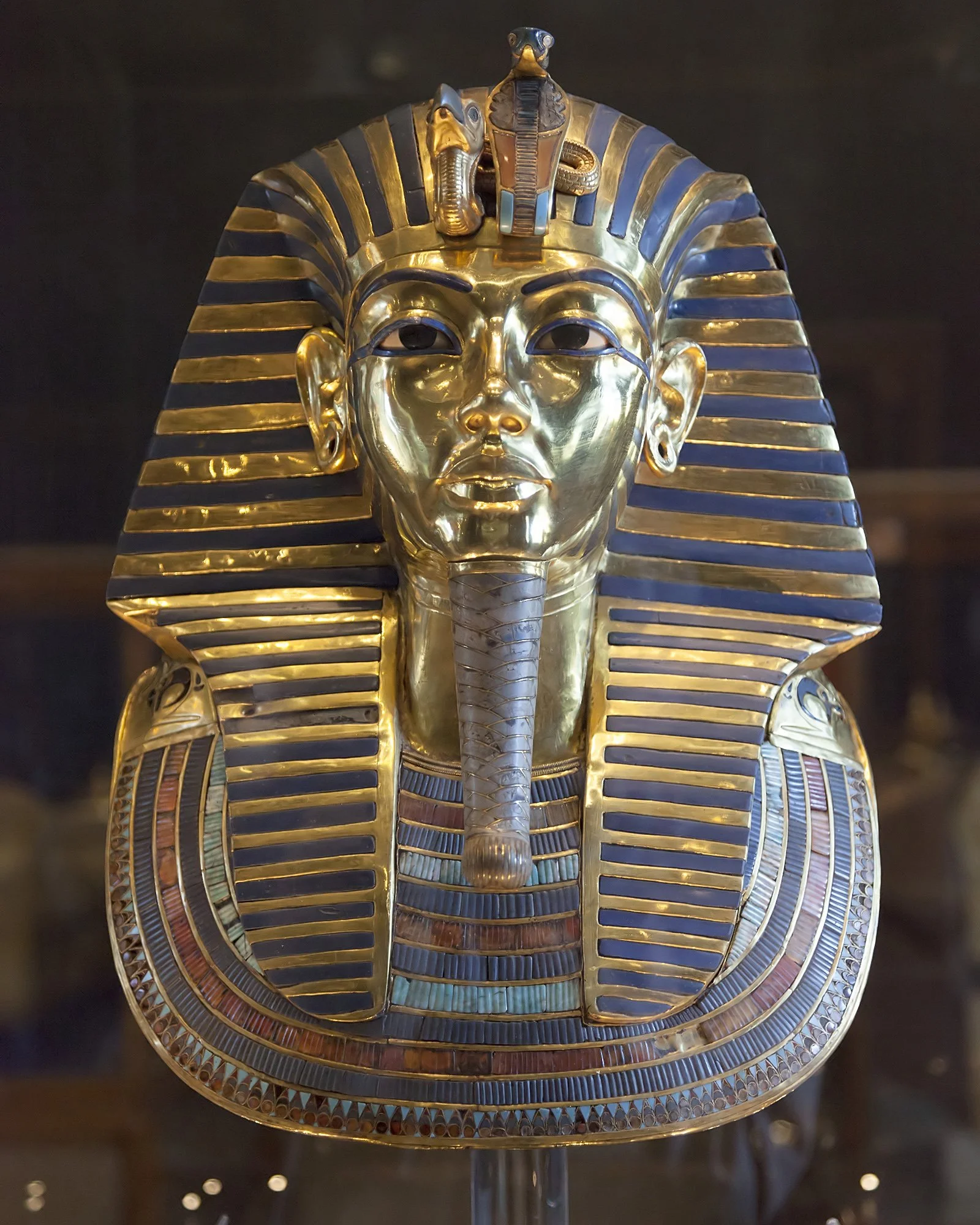
Visit the Grand Egyptian Museum, home to an unparalleled collection of artifacts, including the complete treasures of Tutankhamun, monumental statues, and masterpieces spanning pharaonic history.Citadel of Saladin
Enter Cairo’s great medieval fortress, founded in the 12th century by Salah al-Din — one of the most influential military and political figures of the Middle Ages. From this commanding position atop Mokattam Hill, Saladin reshaped Cairo’s defenses, establishing a fortified seat of power whose walls, gates, and terraces still define the skyline. Within this enclosure, dynasties that followed added their own mosques, palaces, and ceremonial spaces, creating a layered architectural record that spans the Ayyubid, Mamluk, and Muhammad Ali eras.Muhammad Ali Mosque
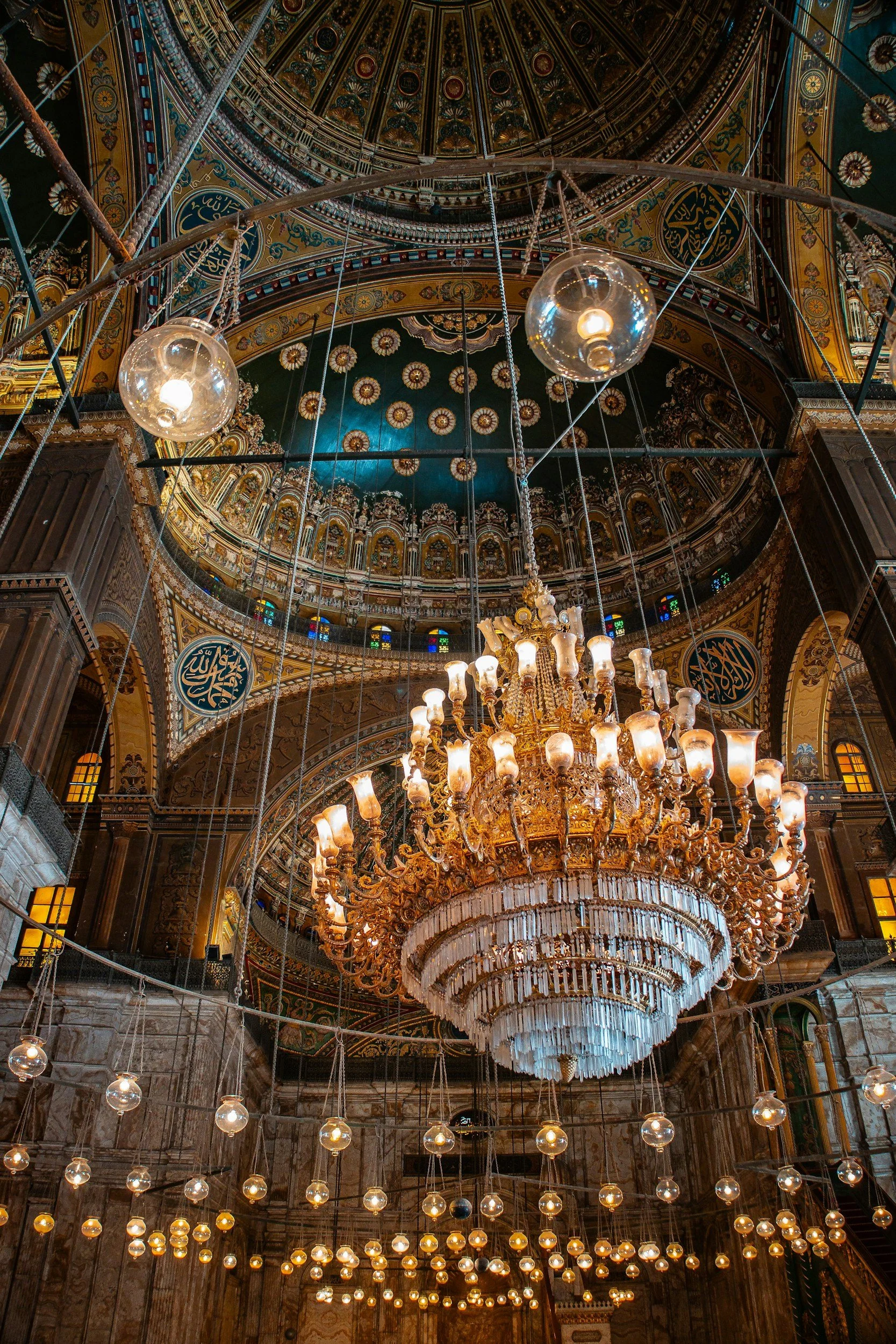
Built between 1830 and 1848 under Muhammad Ali Pasha, this landmark adopts Ottoman-inspired design while representing Egypt’s own 19th-century ambition. Its alabaster interiors, high domes, and expansive terrace form one of the city’s most recognizable silhouettes, offering wide views across Cairo.Mosque of al-Nasir Muhammad
Completed in 1318, this Mamluk royal mosque functioned as the Citadel’s central congregational mosque, hosting the sultans for the weekly Friday prayer — the most important communal service in Islam. Its green-tiled dome, finely carved stucco, and elegant minarets offer a direct connection to Cairo’s medieval architectural core and the Citadel’s earlier period of dynastic rule.Khan el-Khalili & Islamic Cairo Atmosphere
Stroll through the vibrant bazaar and the surrounding historic lanes where artisans, cafés, and workshops sit within centuries-old architecture. This area captures the lived texture of Islamic Cairo, full of movement, color, and traditional craftsmanship.Transfer to Cairo Airport
In the late afternoon, depart central Cairo by private air-conditioned vehicle for the transfer to Cairo International Airport. The movement marks a clear transition — leaving the layered density of the capital and preparing for the shift south.Flight Cairo → Aswan
A short domestic flight carries you along the Nile corridor toward Upper Egypt. Below, desert expanses and cultivated riverbanks alternate, signaling a change in geography, light, and pace.Arrival in Aswan & Private Transfer to Hotel
Upon arrival at Aswan Airport, you are welcomed by your local representative and transferred privately to your hotel. From the first moments, the atmosphere feels distinctly different — warmer tones, granite landscapes, and a quieter rhythm shaped by the river.Hotel Check-in & Evening at Leisure
After check-in, the evening is left free to settle in and rest. This pause allows space to absorb the day’s contrasts before the Nile-centered journey continues.Meals: Breakfast
Overnight: AswanVisits:
• Grand Egyptian Museum
• Saladin Citadel
• Muhammad Ali Mosque
• Mosque of al-Nasir Muhammad
• Khan el-Khalili -
Overview
An early journey south leads deep into Nubia, toward Abu Simbel — a site conceived not only as a temple complex, but as a statement of power carved directly into the natural landscape itself. Architecture, geography, and royal ideology are inseparable here: the temples rise from the rock face with colossal scale and precise alignment, asserting Egypt’s authority at its southern frontier. Their survival is tied to a defining moment of modern history — the construction of the Aswan High Dam, which created Lake Nasser and threatened to submerge the site. In the 1960s, a UNESCO-led operation relocated the temples above the rising waters, linking ancient ambition with 20th-century engineering and setting the context for the day’s return north, where modern infrastructure and pharaonic legacy converge.Itinerary
Early Morning Hotel Pickup
Begin the day with an early morning pickup from your hotel in Aswan by private air-conditioned vehicle. Accompanied by your private English-speaking Egyptologist guide, depart south through the Nubian desert for the overland journey toward Abu Simbel. The route unfolds across open landscapes and long horizons, reinforcing the site’s deliberate remoteness and its symbolic placement at Egypt’s southern frontier.Abu Simbel – Great Temple of Ramesses II
Stand before the colossal façade of the Great Temple, guarded by four seated statues of Ramesses II carved directly into the cliff. Inside, monumental halls and reliefs celebrate royal power, divine authority, and the king’s military achievements, including the Battle of Kadesh. The alignment of the temple reflects advanced astronomical planning, reinforcing its symbolic importance.Temple of Queen Nefertari
Visit the smaller but equally refined temple dedicated to Queen Nefertari and the goddess Hathor. Its façade, carved with standing colossi of the queen and the king, is unique in ancient Egypt, marking one of the rare instances where a royal consort is depicted on an equal scale.Return Journey Toward Aswan
Begin the drive back north toward Aswan, retracing the desert route along the edge of Lake Nasser.High Dam
Visit the High Dam, the modern project that reshaped Egypt’s water landscape in the 20th century. From the dam’s crest, take in the vast expanse of Lake Nasser and understand the role this structure plays in irrigation, electricity, and flood control — a striking contemporary counterpoint to the ancient world seen earlier in the day.Return to Aswan
Continue to your hotel in Aswan, arriving in the evening. The remainder of the night is left free for rest after a long and deeply rewarding day.Meals: Breakfast
Overnight: AswanVisits:
• Great Temple of Ramesses II
• Temple of Queen Nefertari
• High Dam -
Overview
This day is spent exploring Aswan’s key archaeological and cultural sites, moving between river temples, ancient quarries, and the living communities of the southern Nile. The morning covers Philae Temple and the Unfinished Obelisk, offering insight into religious devotion and monumental stonework in Upper Egypt. In the late afternoon, the focus shifts to the Nile itself with a sunset boat journey to a Nubian village, where daily life, architecture, and traditions reflect a culture shaped by the river for thousands of years. The day concludes back in Aswan with a relaxed evening at the hotel.Itinerary
Morning Pickup – From Your Hotel
After breakfast, you are picked up from your hotel in Aswan by private air-conditioned vehicle and driven to the river for the day’s visits.Philae Temple
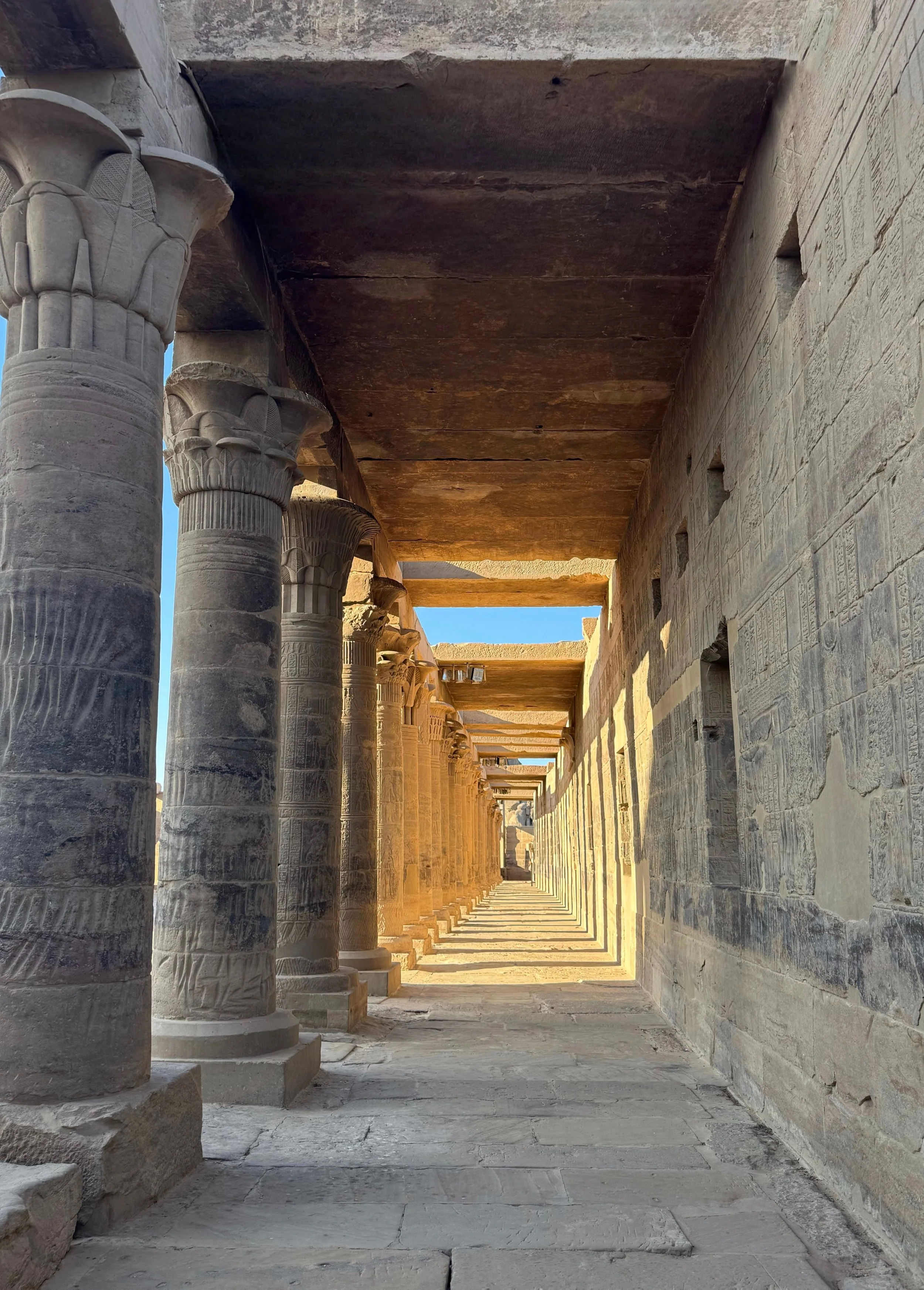
Begin your Aswan day with a boat ride to Philae, one of Egypt’s most atmospheric temple complexes. Approaching the island by water sets the tone: quiet, graceful, and anchored in centuries of devotion to Isis. Within its colonnades and inner courts, reliefs, sanctuaries, and chapels reflect a layered history that continued well into the Roman era. The setting — water, rock, and temple stone — creates a sense of clarity and stillness that makes Philae one of Upper Egypt’s most memorable sites.Unfinished Obelisk
Continue to the granite quarries to see the Unfinished Obelisk, still embedded in the bedrock where ancient craftsmen worked. Its massive scale reveals how obelisks were carved directly from the stone, with tool marks and a natural crack showing precisely why this one was abandoned. The site offers a rare and tangible view into ancient engineering and the sheer physical demands of monumental construction.Nubian Village Sunset Visit
In the late afternoon, board a private motorboat for a scenic ride along the Nile toward a traditional Nubian village. The approach is defined by warm light on the water, palm-lined banks, and the shifting colors of sunset. In the village, brightly painted houses, geometric motifs, and relaxed rhythms reflect a culture with deep roots along the southern Nile. Time is given to walk through the village, meet local residents, and absorb the atmosphere of a community whose identity has endured for centuries.Return to Hotel
After the visit, return by boat and vehicle to your hotel in Aswan for a relaxed evening.Meals: Breakfast
Overnight: AswanVisits:
• Philae Temple
• Unfinished Obelisk
• Nubian Village -
Overview
The day begins with a northbound journey from Aswan to Luxor, following the Nile Valley through Upper Egypt’s cultivated landscapes and desert margins. Upon arrival in Luxor, the focus shifts to the East Bank — the ancient ceremonial heart of Thebes. Visits to Karnak and Luxor Temples introduce the scale, order, and ritual logic of Egypt’s state religion, revealing how temple architecture functioned not only as sacred space, but as an organizing force for the city itself. The day provides a structured transition from the southern frontier of Aswan into the monumental core of ancient Egypt.Itinerary
Private Transfer Aswan → Luxor
Depart Aswan by private air-conditioned vehicle for the overland journey north to Luxor. The route follows the Nile Valley, where cultivated riverbanks, palm groves, and village life unfold between the desert’s edge and the water. This transition through Upper Egypt provides a clear sense of scale and continuity, linking the southern landscapes of Aswan with the ceremonial center of ancient Thebes.Karnak Temple Complex
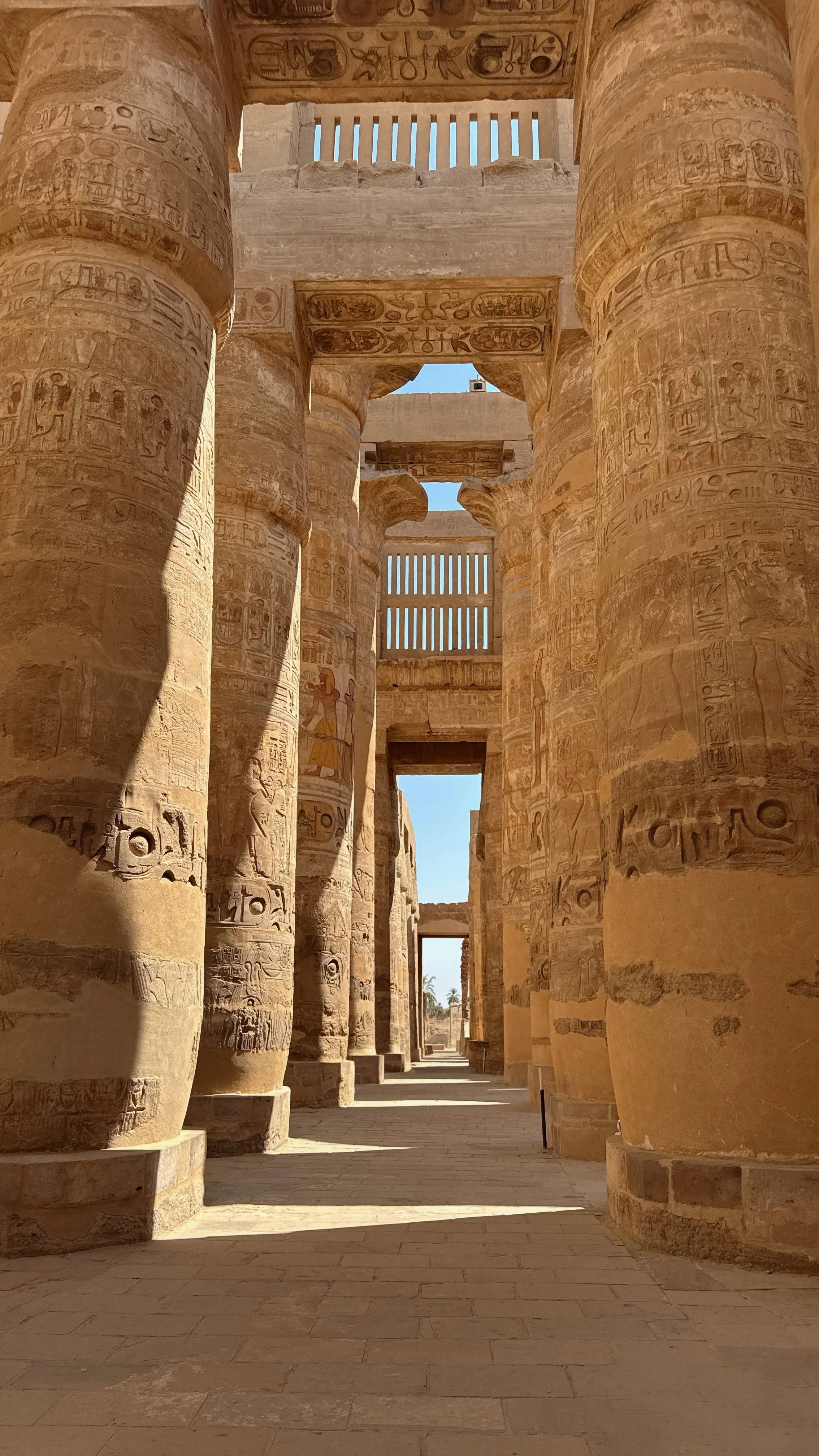
Explore the largest religious complex of ancient Egypt, dedicated primarily to Amun-Ra but expanded over more than 1,500 years by successive pharaohs. Karnak functions not as a single temple but as an immense ceremonial city — courtyards, obelisks, sanctuaries, sphinx-lined avenues, and monumental gateways. The Great Hypostyle Hall, with its 134 massive columns carved with hymns, royal names, and ritual scenes, remains one of the most powerful architectural spaces in the ancient world.Luxor Temple
Explore Luxor Temple, linked to Karnak by the ancient Avenue of the Sphinxes. Built by Amenhotep III and Ramesses II, this temple beautifully reflects the harmony of religion and royalty in ancient Egypt.Hotel Check-in & Evening at Leisure
After completing the East Bank visits, transfer to your 5-star hotel in Luxor for check-in. The evening is left free to rest and settle in, allowing time to absorb the day’s impressions or enjoy the calm atmosphere of the city along the Nile.Meals: Breakfast
Overnight: Luxor hotelVisits:
• Karnak Temple
• Luxor Temple -
Overview
The final morning in Luxor brings together the core elements of New Kingdom legacy — royal tombs, cliffs shaped into sacred landscapes, and monuments that defined Egypt’s most powerful era. The day moves through the Valley of the Kings, the monumental terraces of Hatshepsut, and the silent guardianship of the Colossi of Memnon before shifting into a smooth departure rhythm. By the time you cross back to the East Bank for your private transfer to Luxor Airport, the arc of the journey feels complete: a last immersion in ancient Egypt followed by a calm, orderly transition toward onward travel.Itinerary
Morning Pickup – From Your Hotel
After breakfast, you are picked up from your hotel in Luxor by private air-conditioned vehicle and cross to the West Bank for the day’s exploration.Valley of the Kings
Enter the royal necropolis of the New Kingdom, where pharaohs were buried in elaborately decorated tombs carved deep into the desert cliffs. Inside, corridors and chambers are covered with scenes from sacred texts — celestial maps, gods, and rituals guiding the king toward rebirth and eternity. The Valley reveals both the spiritual imagination and technical mastery of ancient Egypt.— Notable tombs often open to visitors include those of
Ramses IV
Ramses III
Merenptah— Additional optional tombs available for visit
Tutankhamun
Ramesses V & VI
Seti I
AyTemple of Hatshepsut
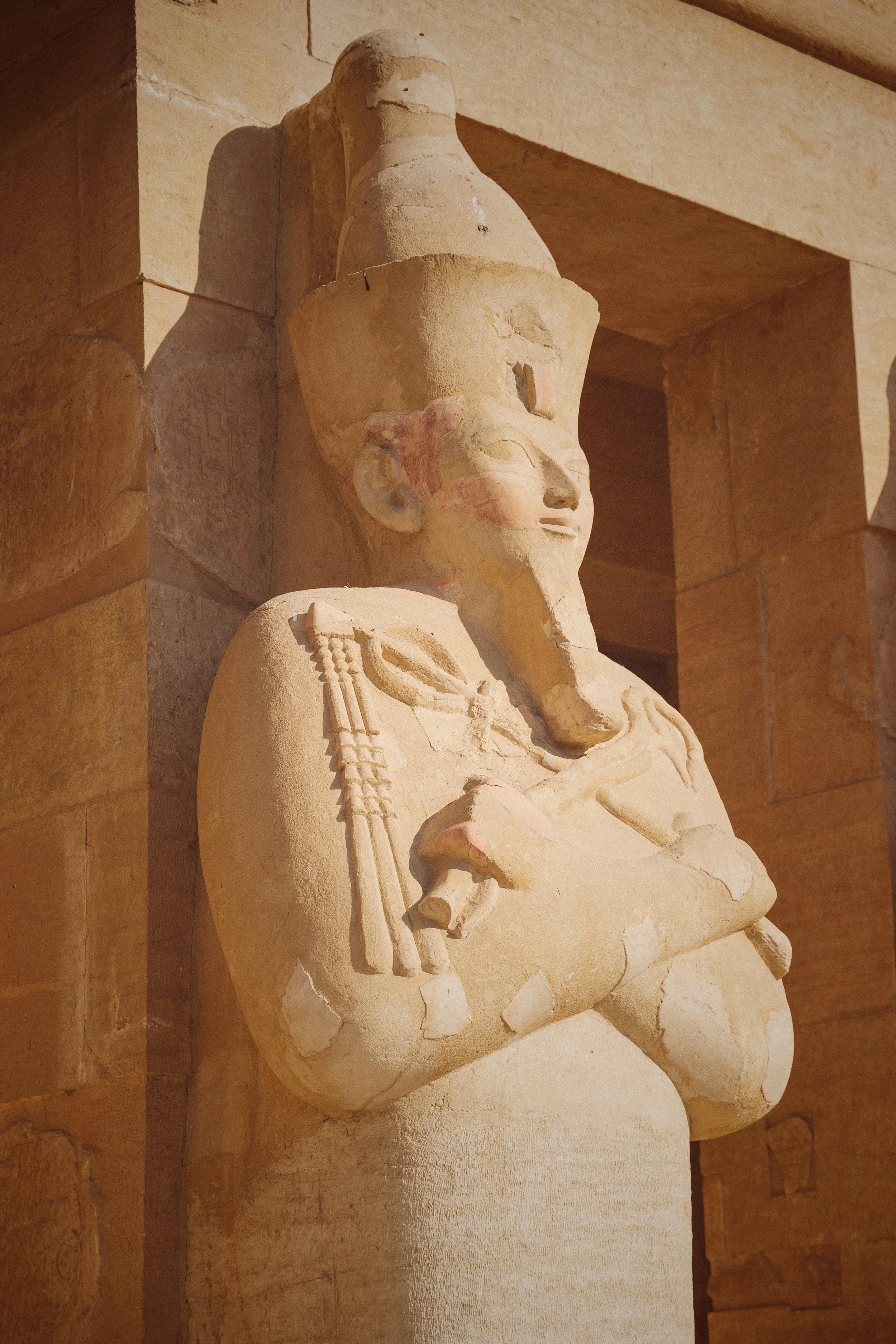
See the terraced mortuary temple of Hatshepsut, carved into the cliffs of Deir el-Bahari, this terraced masterpiece, dedicated to the sun god Amun, honors Egypt’s most powerful female ruler and depicts her divine birth and her famed trade expedition to the Land of Punt.Colossi of Memnon
Stop at the 18-meter statues of Pharaoh Amenhotep III. Once guarding the entrance to his lost mortuary temple, these twin colossal figures have stood watch over the Theban plain for more than 3,400 years — silent witnesses to Egypt’s ancient grandeur.Return to Hotel
After your visits, return to your Luxor hotel for an evening at leisure.Optional Experience: Sunrise Hot-Air Balloon Flight
A pre-dawn departure (between 3:00 and 4:00 AM) takes you to the West Bank launch site, where the balloons rise just before sunrise. As you lift above the valley, the landscape unfolds quietly — fields, villages, desert cliffs, and the great monuments appearing in soft, early light. The experience offers a wide, unhurried perspective on Luxor and a rare sense of calm before the day’s visits begin.Meals: Breakfast
Overnight: Luxor
Visits:
• Valley of the Kings
• Temple of Hatshepsut
• Colossi of Memnon -
Overview
The journey concludes with a composed return north, bringing the experience full circle. After the ceremonial landscapes of Luxor and days shaped by temples, tombs, and the Nile Valley, the transition back to Cairo is intentionally calm. It allows space for the impressions of Upper Egypt to settle — stone, light, and scale — before onward travel. The departure is arranged with the same clarity and care that defined the journey as a whole.Itinerary
Hotel Checkout
After breakfast, check out from your hotel in Luxor and prepare for departure.Transfer to Luxor Airport
A private air-conditioned vehicle transfers you to Luxor International Airport.Flight Luxor → Cairo
A short domestic flight returns you to Cairo, retracing the Nile corridor from Upper Egypt back to the capital.Arrival in Cairo & Onward Departure
Upon arrival at Cairo International Airport, connect to your international flight or continue with pre-arranged onward plans.Meals: Breakfast
Overnight: —Visits: —
THE ROUTE ON THE MAP
INCLUSIONS
GUIDING & EXPERTISEPrivate English-Speaking Egyptologist Guide
TRANSPORTATION & LOGISTICSDedicated private driver throughout the journey
All transfers in a private air-conditioned vehicle, including airport arrivals and departures
Private boat transfer to Philae Temple
Private boat transfer to the Nubian Village
DOMESTIC FLIGHTSCairo → Aswan
Luxor → Cairo
SIGNATURE WATER EXPERIENCESNile Soirée:
Nile dinner cruise experience in Cairo
ACCOMMODATION & STAY OVERVIEW3 nights in Cairo
5-star hotel
Bed & Breakfast2 nights in Aswan
5-star hotel
Bed & Breakfast2 nights in Luxor
5-star hotel
Bed & Breakfast
MEALS & CULINARY INCLUSIONSMeals are included as outlined in the itinerary
SELECTED HOTELS — CAIROHilton Ramses
Hilton Pyramids Golf
Sofitel Cairo Downtown Nile
Fairmont Nile City
Steigenberger Pyramids Cairo
Steigenberger Hotel El Tahrir
SELECTED HOTELS — ASWANThe Zen Wellness Resort
Mövenpick Resort Aswan
SELECTED HOTELS — LUXORHilton Luxor Resort & Spa
Sonesta St. George Hotel Luxor
Steigenberger Nile Palace
ACCESS & SERVICESEntrance fees to all archaeological sites and museums mentioned in the itinerary
Bottled water during all tours and transfers
All service charges and government taxes
A Note on Accommodation AvailabilityOne property from this curated selection will be confirmed for your journey. Final placement is subject to availability, ensuring that your experience always aligns with our rigorous standards for comfort and character.
OPTIONAL ADD-ONS
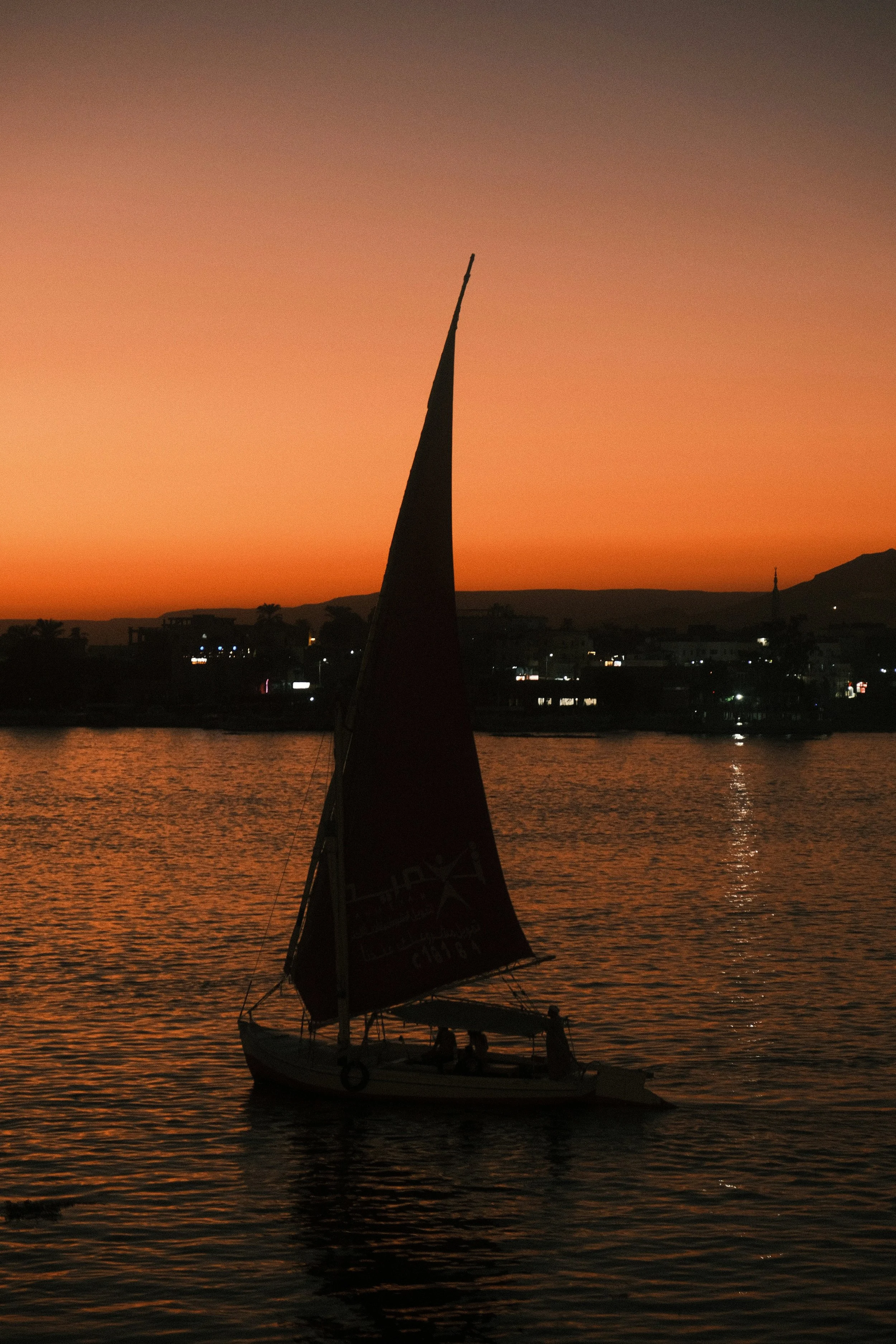
CAIRO: FELUCCA SUNSET SAILA late-afternoon sail on the Nile via a traditional felucca, a wooden vessel powered solely by the wind. The boat is equipped with cushioned seating and operates without a motor. The route provides a view of the Cairo skyline and the urban riverfront during the sunset hours.
GIZA: PYRAMID SOUND & LIGHT SHOWA nighttime presentation at the Giza Pyramids, combining narration, projections, and illuminated views of the monuments. A structured, accessible way to experience the plateau after dark, with seating and clear storytelling about the site’s history.
LUXOR: HOT AIR BALLOON FLIGHTThe experience begins with a pre-dawn departure between 3:00 and 4:00 AM for transfer to the West Bank launch site. You lift off just before sunrise, drifting over the Nile and the monuments of the West Bank of the Luxor valley and its ancient architecture.
EXCLUSIONS
INTERNATIONAL TRANSITAll international flights to and from Egypt. This itinerary commences upon arrival at your designated Egyptian gateway and concludes with your international departure
NATIONAL ENTRY & VISA FORMALITIESThe entry visa is the responsibility of the traveler and may be obtained online in advance (where eligible) or upon arrival
Pre-arrival guidance is shared in advance. Visa and passport formalities are completed within the immigration hall, after which you will be met at the terminal exit
For a fully managed arrival, with visa issuance and passport formalities handled on your behalf inside the restricted zone by a dedicated airport concierge, please refer to our VIP Fast-Track Arrival upgrade
PERSONAL PROTECTIONComprehensive travel and medical insurance.
ELECTIVE EXPERIENCESSupplementary site visits, optional excursions, or personal expenditures not specifically detailed in the itinerary