
CAIRO
DESERT OASES
LUXOR TO ASWAN
NILE CRUISE
A Grand Journey Through Ancient Cultures, Desert Mysteries & Timeless Waters
13-DAY
ITINERARY
THE HEART OF THE EXPERIENCE
A private, 13-day, tailor-made journey through Egypt’s desert oases and the Nile Valley, created for culturally curious travelers seeking depth, continuity, and an unhurried pace. The experience combines archaeological exploration, lived landscapes, and guided historical context — moving from remote desert environments to the classical temples of Upper Egypt and a refined Nile cruise between Luxor and Aswan.
Designed for travelers who prefer structured depth over fast accumulation — guests who value clarity, narrative progression, and the feeling of immersion without pressure. The pacing remains calm and deliberate, allowing each environment to be understood on its own terms before moving forward.
It focuses on the defining layers of this journey: Cairo’s monumental architecture and museum archives; the varied geology and cultural history of Bahariya, Farafra, Dakhla, and Kharga; the silence and scale of the White Desert; and the timeless sequence of temples and tombs along the Nile between Luxor and Aswan. Each region contributes its own dimension — archaeological, geological, historical, or cultural — forming one coherent path.
The continuity of the route is intentional. You move from city to oasis, from fossil basins to medieval towns, from desert valleys to ritual complexes, and finally to the living waters of the Nile. The experience builds gradually, allowing the geography and history to align, revealing how different parts of Egypt have been connected — and separated — over thousands of years.
This structure creates a journey that is both grounded and spacious. It invites reflection without slowing the movement, balances comfort with exploration, and offers a complete sense of Egypt’s diversity — from its earliest civilizations to its remote frontier cultures.
THE GEOGRAPHY
GIZAPyramids of the Giza Plateau
Great Sphinx
Valley Temple
Grand Egyptian Museum
BAHARIYA OASISGolden Mummies Museum
26th-Dynasty tombs including Bannantiu
English House viewpoint over the oasis
BLACK DESERTVolcanic hills and basalt-covered sand
Distinctive dark-topped cones from ancient activity
EL HAIZESmall oasis blessed with a natural hot spring
CRYSTAL MOUNTAINCalcite formations of Crystal Mountain
VALLEY OF AGABATDramatic limestone cliffs and narrow passes
Soft dunes contrasting with steep, sculpted formations
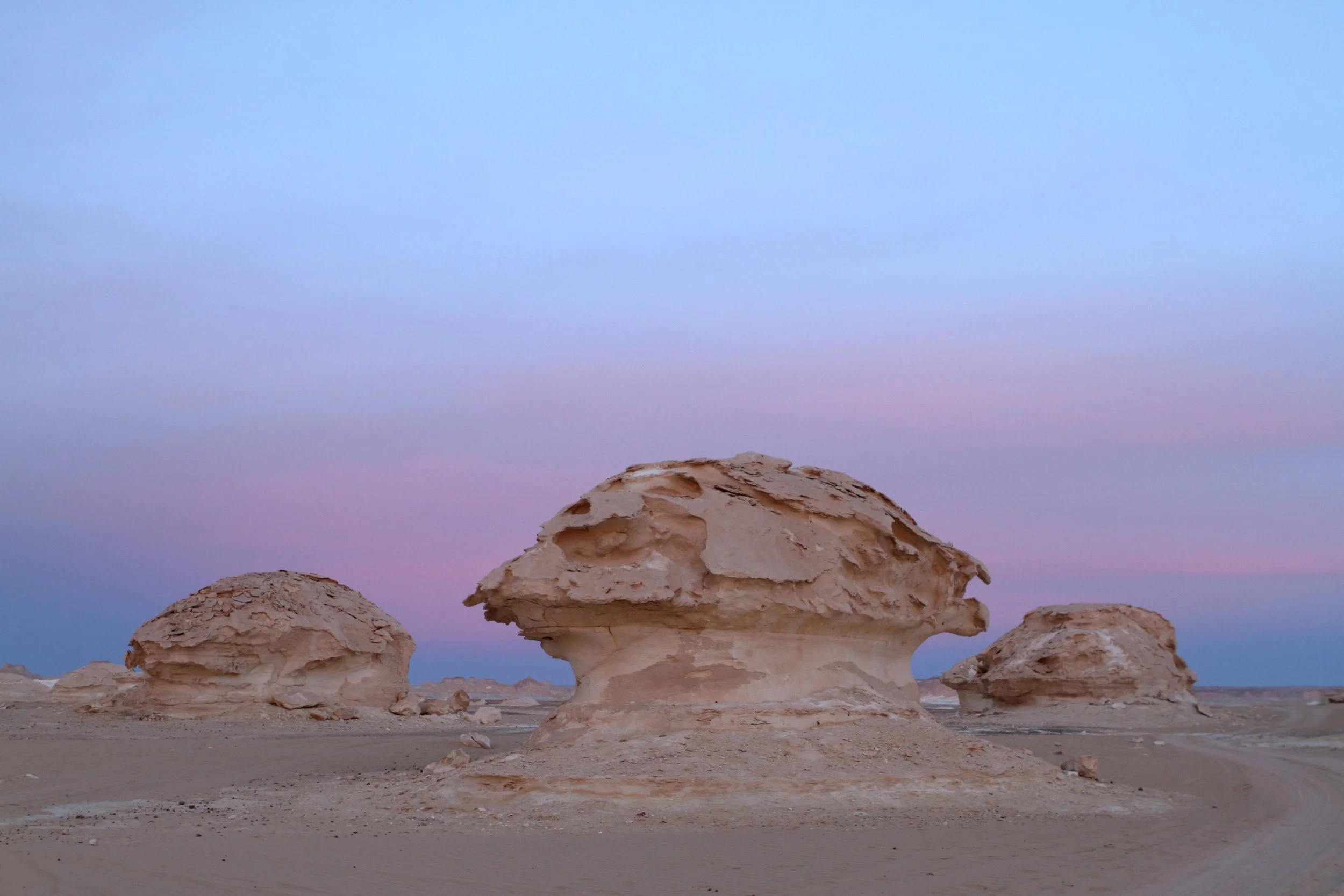
WHITE DESERTWind-carved chalk formations
Open landscapes and desert silence
Overnight camping or lodge stay
FARAFRA OASISBadr Environmental Museum
A quiet, traditional oasis environment
DAKHLA OASISRoman Temple of Deir El Hagar
Mezzawaqqa necropolis
Medieval Islamic village of Al Qasr
KHARGA OASISHibis Temple
Temple of Nadura
Bagawat Christian cemetery
National Museum of the New Valley
LUXOR – EAST BANKKarnak Temple
Luxor Temple
LUXOR – WEST BANKValley of the Kings
Temple of Hatshepsut
Colossi of Memnon
EDFUTemple of Horus
KOM OMBODouble Temple of Sobek & Horus the Elder
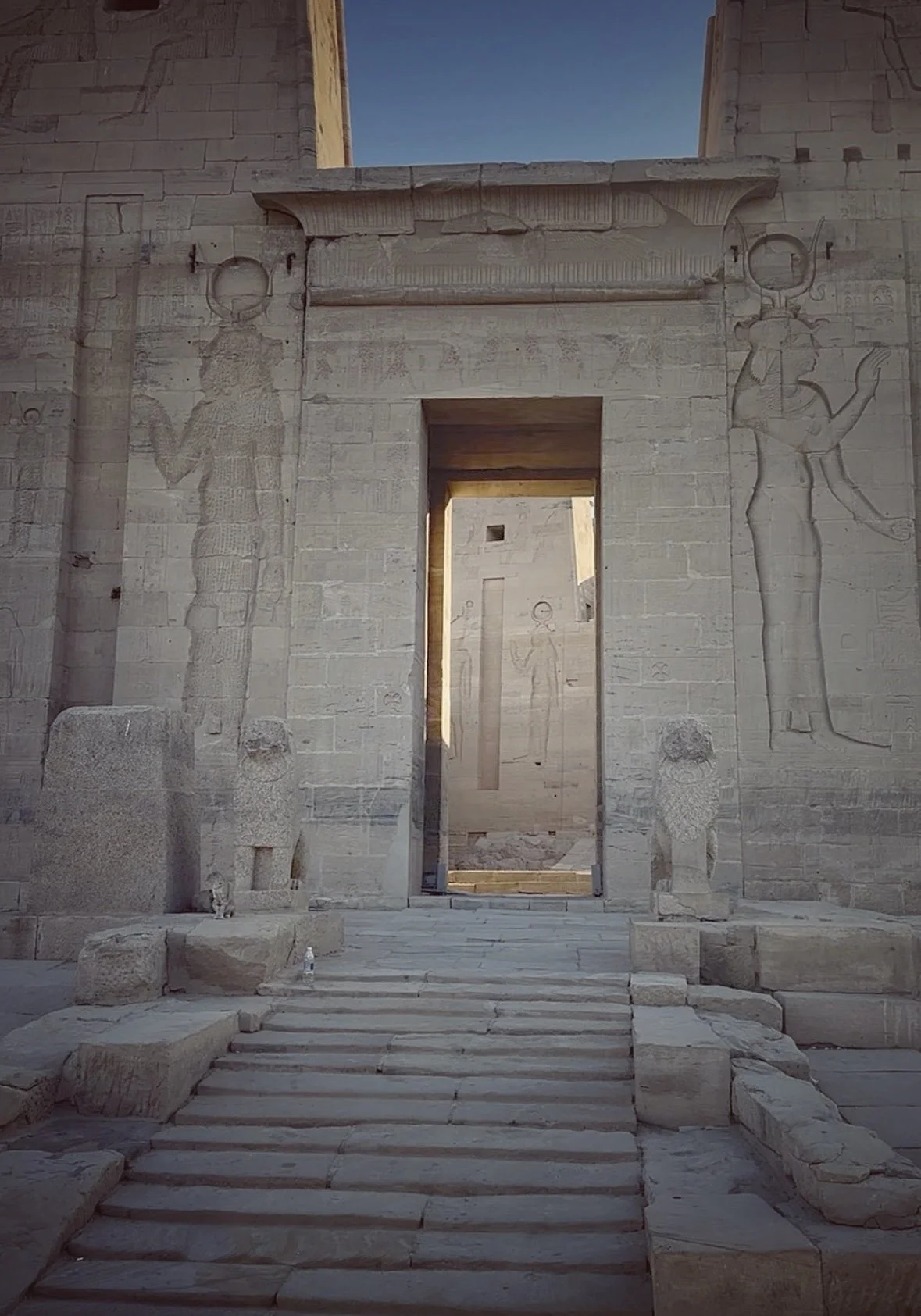
ASWANPhilae Temple
Unfinished Obelisk
High Dam
DETAILED ITINERARY
-
Welcome to Egypt 🇪🇬 ☀️
Overview
Your story begins in Cairo. We have kept this day intentionally gentle, giving you space to breathe, settle in, and let the realization that you have arrived in the land of the Pharaohs slowly sink in.Itinerary
Private Transfer to Hotel
You are welcomed on arrival at Cairo International Airport and transferred privately to your 5-star hotel.Hotel Check-in & Orientation
After reaching your hotel, your tour manager assists with check-in and walks you through the itinerary, confirming pickup times and logistics for the days ahead.Meals: —
Overnight: CairoVisits: —
-
Overview
A full day dedicated to Egypt’s foundational landscape — the desert plateau where the pyramids were conceived as statements of power and belief, the Sphinx guarding the approach, and the Grand Egyptian Museum presenting the material world that sustained these dynasties. The sequence allows you to engage with both scale and meaning: experiencing the architecture in its original setting, then examining the statues, texts, and royal objects that reveal how these monuments functioned within the broader system of ancient Egyptian thought.Itinerary
Morning Pickup – From Your Hotel
Begin the day with pickup from your hotel, where your guide and driver meet you for departure toward the Giza Plateau.Pyramids of the Giza Plateau
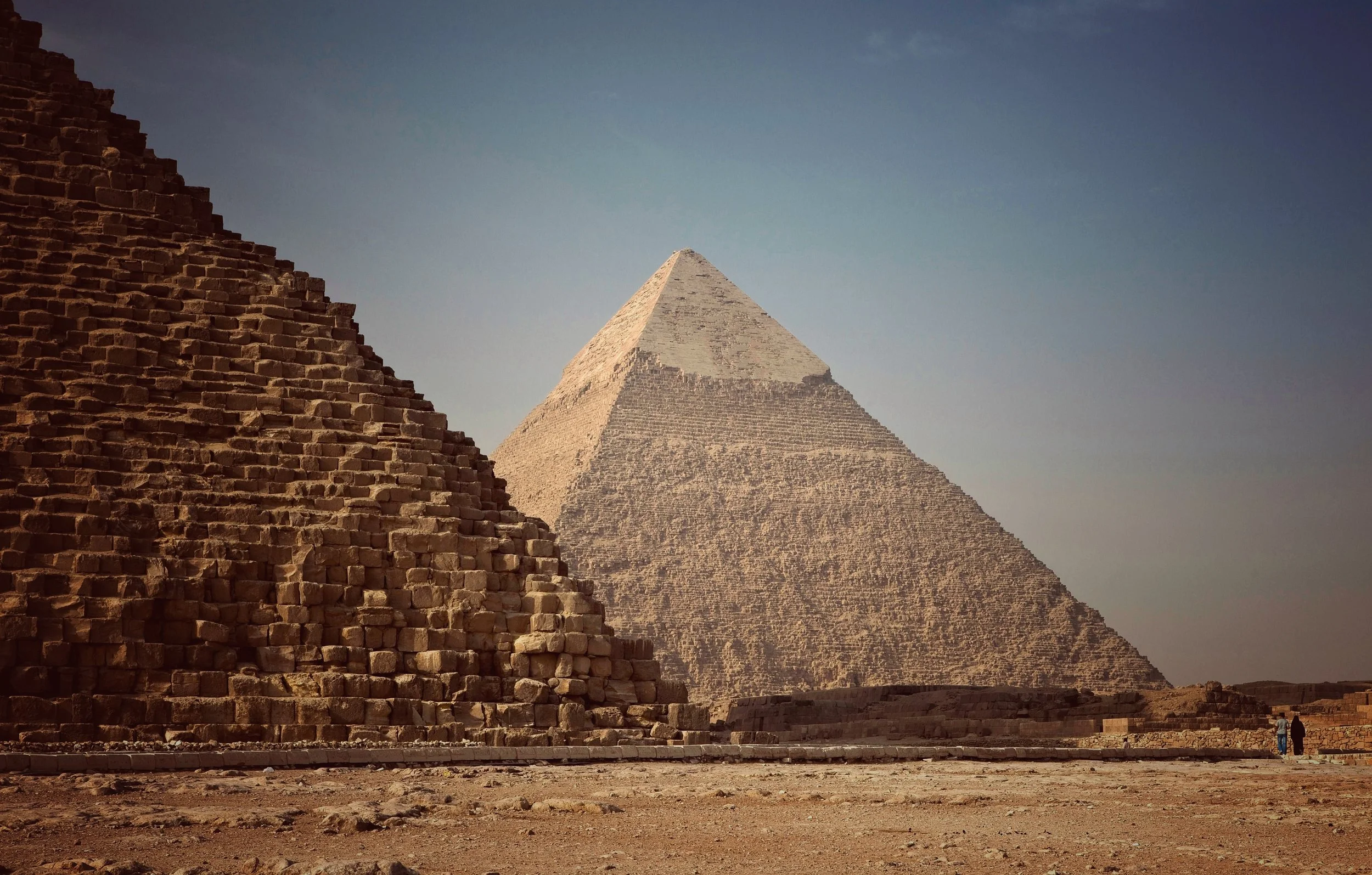
Visit the Great Pyramid of Khufu together with the pyramids of Khafre and Menkaure, exploring the architectural precision, symbolism, and desert setting that shaped the foundations of Old Kingdom kingship.Panoramic Views and Photo Stops
Enjoy key viewpoints over the plateau where all three pyramids align against the desert horizon.Valley Temple and Great Sphinx
Visit the Valley Temple of Khafre, built from massive limestone blocks and used for royal ritual. Stand before the Great Sphinx, carved directly from the natural bedrock and guarding the entrance to the plateau.Lunch Break
Enjoy lunch at a nearby restaurant offering classic Egyptian flavors.Grand Egyptian Museum
Continue to the Grand Egyptian Museum, home to an unparalleled collection of artifacts, including the complete treasures of Tutankhamun, monumental statues, and masterpieces spanning pharaonic history.Return to Hotel
Settle into your private transfer back to your hotel in Cairo for a relaxed evening at leisure.Meals: Breakfast, Lunch
Overnight: CairoVisits:
• Giza Plateau
• Great Pyramid of Khufu
• Pyramids of Khafre and Menkaure
• Valley Temple
• Great Sphinx
• Grand Egyptian Museum -
Overview
Travel west from Cairo into the landscapes where the Nile Valley gives way to the vast Western Desert. Bahariya Oasis introduces the journey’s first shift in atmosphere — from urban scale to quiet basins, palm groves, and archaeological sites shaped by Greco-Roman, Pharaonic, and early modern history. The day combines movement, context, and discovery: a desert road crossing, a museum of golden mummies, painted tombs from the Saite Period, and elevated views over the oasis at sunset.Itinerary
Morning Pickup – From Your Hotel
Begin the day with pickup from your hotel in Cairo by private air-conditioned vehicle. Travel west across desert plains toward the edge of the Western Desert, where the cultivated Nile Valley gradually gives way to open, arid landscapes.Vehicle Transition – Edge of the Desert
At the desert edge, change vehicles and continue the journey by private 4×4 — a practical and symbolic transition marking the shift from paved roads to oasis and desert terrain.Drive to Bahariya Oasis
Continue through open desert landscapes toward Bahariya Oasis, long known for its palm groves, natural springs, and its historical role as a caravan hub linking the Nile Valley with the Western Desert.Golden Mummies Hall
Explore the collection of Greco-Roman mummies preserved with gold leaf, painted cartonnage, and elaborate funerary designs that reveal how Egyptian and classical traditions merged in the oases.26th-Dynasty Tombs
Enter the tombs of Saite-period nobles, including the Tomb of Bannantiu. Vivid wall scenes of deities, offerings, and afterlife journeys illustrate the beliefs and artistic style of the late Pharaonic era.English House Viewpoint
Visit the so-called “English House,” a stone outpost built during the early 20th century and used briefly by British officials stationed in the oasis. The structure itself is modest, but its elevated position offers wide, uninterrupted views over Bahariya’s palm groves, cultivated fields, and the surrounding desert ridges — one of the oasis’ most atmospheric lookout points.Meals: Breakfast, Lunch, Dinner
Overnight: Bahariya OasisVisits:
• Golden Mummies Museum
• 26th-Dynasty Tombs
• English House Viewpoint -
Overview
A full-day 4×4 journey through the Western Desert, moving across four distinct landscapes that reveal the desert’s geological depth. The day begins in the Black Desert. From there, the route shifts to the mineral ridge of Crystal Mountain, followed by the sweeping limestone corridors and soft dunes of Agabat Valley. The route ends in the quiet, open plains of the White Desert, where wind-shaped chalk formations create one of Egypt’s most striking natural scenes. Across a single day, the landscape shifts in clear contrasts—dark volcanic fields, glittering crystal ridges, golden dune corridors, and luminous white plateaus—forming a continuous progression through the Western Desert’s most iconic environments.Itinerary
Black Desert
Move across volcanic plains where ancient eruptions left hills capped with dark basalt. The contrast of black peaks rising from pale sand creates one of the Western Desert’s most dramatic landscapes.El Haize Oasis
Pause in this quiet desert outpost known for its natural hot spring and clusters of palms — a small, green rest point on the way toward deeper desert terrain.Crystal Mountain
Stop at Crystal Mountain, a natural ridge composed of calcite crystals that formed under immense geological pressure. The exposed veins shimmer under direct sunlight, creating the impression of a fractured, glittering arch set in the middle of the desert. Though often referred to as a “mountain,” it is in fact a mineral-rich outcrop — one of the region’s most unusual formations, where crystals embedded in the rock catch and scatter the light in a way that feels almost otherworldly.Valley of Agabat
Enter one of the Western Desert’s most beautiful natural corridors — a landscape where smooth dunes, white limestone cliffs, and narrow passes create a sense of scale and quiet that feels almost otherworldly.White Desert
Enter the White Desert, a vast plain of chalk shaped over millions of years into towers, ridges, and sculptural forms that change character with the light. The formations — from mushroom shapes to abstract silhouettes — feel almost hand-carved, yet entirely natural. The silence here is immense, the horizon open and uninterrupted, creating a sense of stillness that is rare even in desert environments. Sunset transforms the limestone into shades of gold and rose, and night reveals one of the clearest star fields in Egypt.Meals: Breakfast, Lunch, Dinner
Overnight: White Desert camp or Farafra lodgeVisits:
• Black Desert
• El Haize Oasis
• Crystal Mountain
• Valley of Agabat
• White Desert -
Overview
Move from the quiet artistic atmosphere of Farafra into the deeper Western Desert, where Roman temples, early Christian necropolises, and a remarkably preserved medieval village reveal the long human history of Dakhla Oasis. The day balances landscape, culture, and archaeology, showing how different communities shaped this remote frontier over thousands of years.Itinerary
Badr Museum
Visit the open-air museum created by Badr Abdel Moghny, where mud-brick sculptures and paintings reflect the rhythms, stories, and traditions of oasis life. The works are built entirely from local materials, blending art with the surrounding desert landscape.Drive Toward Dakhla Oasis
Continue southwest along desert roads that link Farafra to Dakhla. This route crosses broad plains and low ridges, revealing how the oases once formed a chain of life across the Western Desert.Deir El Hagar Temple
Explore the Roman-era temple dedicated to Amun, Mut, and Khonsu, set in a quiet desert clearing. Its restored walls and well-preserved reliefs illustrate the fusion of Roman rule with local religious traditions.Mezzawaqqa Necropolis
Visit a group of Roman-period rock-cut tombs carved into the desert slopes. Architectural elements, vaults, and decorative traces still reflect the funerary practices of the early centuries CE.Al Qasr Medieval Village
Walk through the mud-brick lanes of Al Qasr, one of Egypt’s most intact medieval settlements. The village preserves an Ayyubid-era mosque, traditional homes, narrow alleys, and carved wooden lintels — a rare example of Islamic desert architecture left largely untouched.Meals: Breakfast, Lunch, Dinner
Overnight: Dakhla OasisVisits:
• Badr Museum
• Deir El Hagar Temple
• Mezzawaqqa Necropolis
• Al Qasr Medieval Village -
Overview
Travel into Kharga Oasis to explore a sequence of sites that reveal the region’s layered past — from the Persian-era Hibis Temple to Roman watchpoints and early Christian chapels at Bagawat. The day moves through wide desert landscapes and ends with a clear sense of Kharga’s role as a crossroads of empire, faith, and settlement in Egypt’s Western Desert.Itinerary
Drive Across the Desert Corridor
Travel through the broad desert corridor that links Dakhla and Kharga, passing wide plains, low ridges, and the characteristic landscapes that shape this part of the Western Desert. The route offers long desert horizons and a sense of scale that sets the tone for Kharga’s archaeological landscape.Hibis Temple
Explore the best-preserved Persian-period temple in Egypt. Its reliefs, columns, and inscriptions reveal a rare moment in Egyptian history when Achaemenid influences blended with local traditions, creating a sanctuary unlike any other in the Western Desert.Temple of Nadura
Visit the hilltop remains of Nadura, a Roman-era temple strategically positioned to oversee caravan routes. From the elevated vantage point, you can understand how the oasis once functioned as a fortified stop along desert trade networks.Bagawat Christian Cemetery
Walk through one of the oldest surviving Christian cemeteries in the world. The domed chapels, painted with early biblical scenes, preserve a unique record of Coptic art and spirituality in the desert frontier.National Museum of the New Valley
A carefully curated collection showcasing the multi-layered history of the Western Desert: Pharaonic artifacts, Roman material, early Christian pieces, and ethnographic displays that reflect life across the oases.Meals: Breakfast, Lunch, Dinner
Overnight: KhargaVisits:
• Hibis Temple
• Temple of Nadura
• Bagawat Christian Cemetery
• National Museum of the New Valley -
Overview
This day marks the transition from the deep Western Desert back to the heart of ancient Egypt. The route from Kharga to Luxor leads across desert plateaus and low mountain ridges before descending into the fertile stretch of the Nile Valley. The shift is striking — from muted desert horizons to the dense greenery, villages, and river landscapes that have shaped Egyptian life for millennia. It is a day of movement and contrast, offering a natural pause between the quiet isolation of the oases and the historic richness of Luxor.Itinerary
Desert and Mountain Crossing
Travel from Kharga toward Luxor along a route that leaves the open desert gradually behind. The drive passes through wide, muted plains before rising into low mountain ridges that form the natural boundary between the oases and the Nile Valley. The scenery shifts steadily — from stark horizons to subtle changes in terrain, then to the first signs of cultivated land. This crossing makes the contrast between desert isolation and the life sustained by the Nile immediately visible.Arrival in Luxor
Descend into the green expanse of the Nile Valley and enter Luxor, a city that overlays modern life with ancient history. Check in to your hotel on the East Bank and settle into a setting shaped by temples, river views, and the slower rhythm of Upper Egypt.Afternoon and Evening at Leisure
The rest of the day is intentionally open. After the overland journey, this quiet afternoon gives space to rest, reset, or take a short walk along the Corniche. Whether you prefer to relax at the hotel or get an early sense of Luxor’s atmosphere, the time is yours to use at your own pace.Meals: Breakfast
Overnight: Luxor hotelVisits: —
-
Overview
Begin the day in Luxor, the ancient “land of the living,” where temples were raised to honor the gods, stage royal procession, and express the architecture of kingship at full scale. The program moves through Karnak’s vast ceremonial city and the refined symbolism of Luxor Temple, then transitions seamlessly to river life as you embark your Nile cruise and settle into the calmer rhythm of Upper Egypt.Itinerary
Morning Pickup – From Your Luxor Hotel
After breakfast, your Private English-Speaking Egyptologist Guide and driver meet you at your hotel for a private transfer to Luxor’s East Bank sites.Karnak Temple Complex
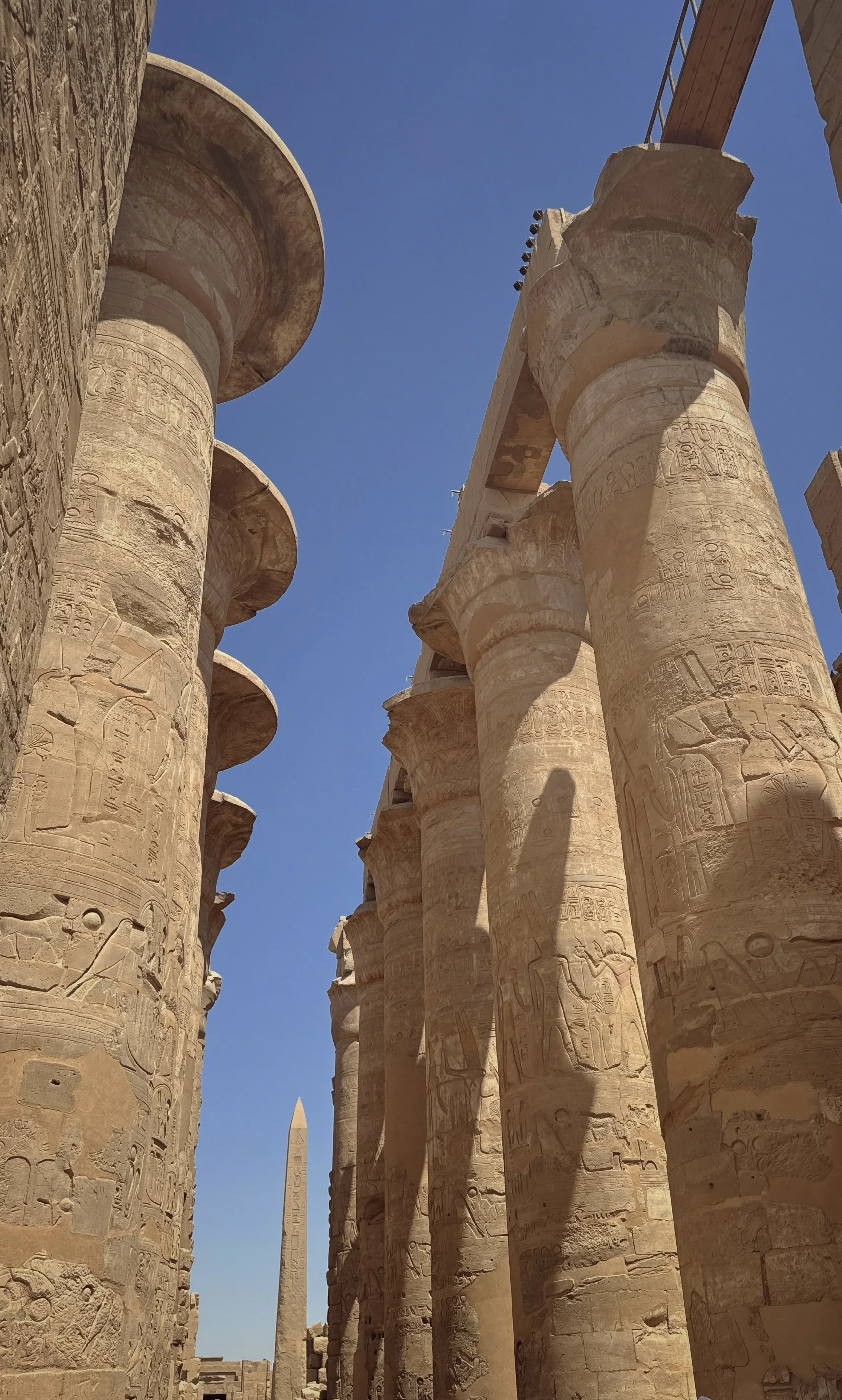
Explore the largest religious complex of ancient Egypt, dedicated primarily to Amun-Ra and expanded over more than 1,500 years by successive pharaohs. Karnak is not a single temple but an entire ceremonial city: vast courtyards, obelisks, sanctuaries, sphinx-lined avenues, and monumental gateways. The Great Hypostyle Hall, with its 134 towering columns carved with hymns, royal names, and scenes of ritual, remains one of the most striking architectural spaces in the ancient world.Luxor Temple
Explore Luxor Temple, linked to Karnak by the ancient Avenue of the Sphinxes. Built by Amenhotep III and Ramesses II, this temple reflects the harmony of religion and royal authority and the ceremonial life of ancient Thebes.Nile Cruise Embarkation
After the visits, transfer to your 5-star Nile cruise for embarkation. Settle into your cabin and ease into the onboard rhythm — open decks, soft light on the water, and the steady presence of the river. Lunch is served on board.Evening on Board – Docked in Luxor
Dinner is served on board, with quiet time to unwind on deck and watch the riverfront lights as you settle fully into the pace of Nile travel.Meals: Breakfast, Lunch, Dinner
Overnight: Nile cruiseVisits:
• Karnak Temple
• Luxor Temple -
Overview
Cross the Nile to the West Bank — the ancient realm of the afterlife, where cliffs, tombs, and mortuary temples reveal how the New Kingdom understood death, rebirth, and royal legacy. The day brings together the essential sites of Thebes: the Valley of the Kings with its painted royal tombs, the terraced temple of Hatshepsut rising sharply against the mountains, and the Colossi of Memnon watching over the plain. After the visit, the rhythm shifts as you return to the cruise and begin sailing south toward Edfu, allowing the landscape of the Nile to re-enter the experience.Itinerary
Morning Pickup – From Your Nile Cruise
Begin the day with pickup from your Nile cruise and cross to Luxor’s West Bank for exploration of the royal necropolis and mortuary temples.Valley of the Kings
Enter the royal necropolis of the New Kingdom, where pharaohs were buried in elaborately decorated tombs carved deep into the desert cliffs. Inside, corridors and chambers are covered with scenes from sacred texts — celestial maps, gods, and rituals guiding the king toward rebirth and eternity. The Valley reveals both the spiritual imagination and technical mastery of ancient Egypt.— Notable tombs often open to visitors include those of
Ramses IV
Ramses III
Merenptah— Additional optional tombs available for visit
Tutankhamun
Ramesses V & VI
Seti I
AyTemple of Hatshepsut
See the terraced mortuary temple of Hatshepsut, carved into the cliffs of Deir el-Bahari, this terraced masterpiece, dedicated to the sun god Amun, honors Egypt’s most powerful female ruler and depicts her divine birth and her famed trade expedition to the Land of Punt.
Colossi of Memnon
Stop at the 18-meter statues of Pharaoh Amenhotep III. Once guarding the entrance to his lost mortuary temple, these twin colossal figures have stood watch over the Theban plain for more than 3,400 years — silent witnesses to Egypt’s ancient grandeur.Return to Cruise & Sail to Edfu
Return on board for lunch as the pace of the day softens. The boat begins its southbound journey toward Edfu, moving past palm groves, fields, and small riverside communities that reflect the quiet, lived rhythm of the Nile Valley. The shift from monumental sites to the slow movement of the river creates a natural transition into the next chapter of the journey.Meals: Breakfast, Lunch, Dinner
Overnight: Nile cruiseVisits:
• Valley of the Kings
• Temple of Hatshepsut
• Colossi of Memnon -
Overview
Spend the day moving between two of the Nile’s most significant Ptolemaic temples while the cruise continues its southbound journey. Edfu and Kom Ombo each reveal a different facet of late-period Egyptian religion — one centered on the power and protection of Horus, the other built as a perfectly symmetrical sanctuary honoring both Sobek and Horus the Elder. Between visits, the Nile itself becomes part of the experience: long stretches of quiet sailing, riverbank villages, fields, and palm groves giving a clear sense of life along the water as you approach Aswan.Itinerary
Carriage Transfer from the Riverbank
Disembark at the Edfu riverbank and travel by traditional horse-drawn carriage through the town. This short ride follows the historic processional route once used by temple priests and visitors approaching the sanctuary.Temple of Horus at Edfu
Enter the Temple of Horus, the best-preserved major temple in Egypt. Its monumental pylons, intact chambers, and sharply carved reliefs make it an extraordinary example of Ptolemaic religious architecture. Inside, scenes depict the mythological battles between Horus and Seth, ceremonial processions, and temple rituals that once animated this sanctuary. The scale, clarity, and completeness of the reliefs offer a rare opportunity to read stories and symbolism exactly as ancient visitors would have seen them.Return by Horse-Drawn Carriage
After the temple visit, return by traditional horse-drawn carriage to the riverbank, following the same historic route back to the Nile cruise.Cruising the Nile
Continue sailing south toward Kom Ombo. This stretch of the river is especially atmospheric: cultivated fields, date palms, cattle grazing along the banks, and small riverside villages appearing at intervals. From the deck, the landscape unfolds at an unhurried rhythm, giving a clear sense of how communities have lived beside the Nile for millennia. The stillness, the wide horizon, and the slow pace of travel create a natural pause between temple visits.Kom Ombo Temple
Arrive at Kom Ombo, uniquely built as a perfectly symmetrical double temple dedicated to two deities: Sobek, the crocodile god associated with strength and fertility, and Horus the Elder, linked to protection and kingship. Twin entrances, twin halls, and twin sanctuaries reinforce this duality. Reliefs throughout the complex illustrate offerings, rituals, and — most famously — a set of carvings interpreted as ancient medical instruments, offering insight into Ptolemaic knowledge and practice. Its location directly on the riverbank adds a dramatic setting, especially in late afternoon light.Crocodile Museum
Step inside the Crocodile Museum, located directly beside the Kom Ombo Temple — a placement that reflects its close historical connection to the cult of Sobek. Inside, a carefully curated collection displays mummified crocodiles of varying sizes, votive offerings, and ritual artifacts once dedicated to the god. The museum bridges the environment, the temple, and ancient belief: the crocodiles that once inhabited this bend of the Nile, the inscriptions carved into the temple walls, and the everyday devotion of local communities all converge here in one clear, tangible narrative.Evening Sail to Aswan
Reboard the cruise and continue the southbound journey toward Aswan. The evening hours on the Nile are particularly serene: soft light over the water, small settlements along the river, and stretches of open landscape as the cruise approaches Upper Egypt. Dinner is served on board as the boat moves steadily toward Aswan, setting the tone for the next day’s discoveries.Meals: Breakfast, Lunch, Dinner
Overnight: Nile cruiseVisits:
• Edfu Temple
• Kom Ombo Temple -
Overview
Begin the day at Philae Temple, reached by boat and considered one of Egypt’s most graceful island sanctuaries. From this sacred setting, the focus shifts to modern engineering at the High Dam — a structure that reshaped Egypt’s water management and the landscape of Aswan. The day concludes in the ancient granite quarries with the Unfinished Obelisk, where tool marks and the fractured monolith reveal how colossal statues and obelisks were carved directly from the bedrock. The progression from temple to dam to quarry offers a clear, structured view of Aswan’s spiritual heritage, modern history, and ancient craftsmanship. The evening brings you back to the calm of your cruise for a final night on the Nile.Itinerary
Morning Pickup – From Your Nile Cruise
Begin the day with pickup from your Nile cruise, followed by a short drive to the river landing. From there, transfer by motorboat to the island sanctuary of Philae Temple, where the day’s visits begin.Philae Temple
Begin your Aswan day with a boat ride to Philae, one of Egypt’s most atmospheric temple complexes. Approaching the island by water sets the tone: quiet, graceful, and anchored in centuries of devotion to Isis. Within its colonnades and inner courts, reliefs, sanctuaries, and chapels reflect a layered history that continued well into the Roman era. The setting — water, rock, and temple stone — creates a sense of clarity and stillness that makes Philae one of Upper Egypt’s most memorable sites.High Dam
Visit the High Dam, the modern project that reshaped Egypt’s water landscape in the 20th century. From the dam’s crest, take in the vast expanse of Lake Nasser and understand the role this structure plays in irrigation, electricity, and flood control — a striking contemporary counterpoint to the ancient world seen earlier in the day.Unfinished Obelisk
Continue to the granite quarries to see the Unfinished Obelisk, still embedded in the bedrock where ancient craftsmen worked. Its massive scale reveals how obelisks were carved directly from the stone, with tool marks and a natural crack showing precisely why this one was abandoned. The site offers a rare and tangible view into ancient engineering and the sheer physical demands of monumental construction.Evening in Aswan on Board
Return to your Nile cruise for dinner and a calm final evening on the river. The soft southern light, the movement of the water, and the quiet along the banks bring the day to a settled close.Meals: Breakfast, Lunch, Dinner
Overnight: Nile cruiseVisits:
• High Dam
• Unfinished Obelisk
• Philae Temple -
Overview
Conclude your Nile cruise and shift into the final, softer rhythm of the journey. The morning in Aswan marks a natural closing moment — stepping off the boat, leaving the river’s gentle pace, and transitioning toward the scale of Cairo. The flight north creates a clear passage between two atmospheres: the calm, intimate movement of the Nile and the vivid energy of the capital. The evening in Cairo is intentionally light, offering space to rest, settle in, and let the impressions of Upper Egypt linger before your departure.Disembark in Aswan
Check out from your cabin and step off the cruise vessel, marking the close of the Nile portion of your journey and the transition back to city travel.Private Transfer to Aswan Airport
Meet your driver and travel in comfort to Aswan Airport for your domestic flight. The transfer is seamless and unhurried, allowing the shift from river pace to air travel to feel natural.Flight Aswan → Cairo
Fly north toward Cairo, concluding the Nile portion of the journey.Private Transfer to Your Hotel in Cairo
Upon landing, your private driver transfers you directly to your hotel for the final night of the trip.Arrival in Cairo
Settle into your hotel for the final night of the journey. The evening is intentionally light — a quiet moment to rest, enjoy dinner, or simply let the experiences of the Nile, temples, and landscapes settle in before departure.Meals: Breakfast
Overnight: Cairo hotelVisits: —
-
Overview
Your last morning in Egypt is kept calm and unhurried. After days of exploring this country — its history, landscapes, food, people, and the rhythm that connects ancient tradition with modern life — this is the moment to simply take in what the journey has meant. The departure is structured to give you space to reflect, settle, and carry the experience with you as you leave.Itinerary
Private Transfer to Cairo International Airport
After breakfast, your driver meets you for your airport transfer. The transition is clear, organized, and smooth — a quiet close to your time in Egypt and a steady beginning to your onward travels.Meals: Breakfast
Visits: —
THE ROUTE ON THE MAP
Important NoteDesert routes may change due to weather, road conditions, or safety considerations. Your guide will make adjustments only when necessary, ensuring your comfort and safety while preserving the essence and highlights of the itinerary.
INCLUSIONS
GUIDING & EXPERTISEPrivate English-Speaking Egyptologist Guide
Professional Private Local Desert Guide
TRANSPORTATION & LOGISTICSDedicated private driver throughout the journey
All transfers in a private air-conditioned vehicle, including airport arrivals and departures
4×4 vehicles for all off-road travel
Private horse-carriage transfer to the Temple of Horus in Edfu
Private boat transfer to Philae Temple
DOMESTIC FLIGHTAswan → Cairo
SIGNATURE WATER EXPERIENCENile Cruise:
5-star Nile Cruise
Between Luxor and Aswan
ACCOMMODATION & STAY OVERVIEW3 nights in Cairo
5-star hotel
Bed & Breakfast1 night in Bahariya Oasis
Lodge
Full Board1 night in the White Desert
Desert camping or traditional Farafra lodge
Full Board1 night in Dakhla Oasis
Lodge/hotel
Full Board1 night in Kharga Oasis
Hotel
Full Board1 night in Luxor
5-star hotel
Bed & Breakfast4 nights aboard a 5-star Nile Cruise between Luxor and Aswan
Full Board
MEALS & CULINARY INCLUSIONSMeals are included as outlined in the itinerary
SELECTED HOTELS — CAIROHilton Ramses
Hilton Pyramids Golf
Sofitel Cairo Downtown Nile
Fairmont Nile City
Steigenberger Pyramids Cairo
Steigenberger Hotel El Tahrir
SELECTED DESERT & OASIS LODGESBahariya Oasis: Hand-selected eco-lodge or boutique desert lodge
White Desert: Private overnight desert camping or traditional Farafra lodge
Dakhla Oasis: Desert lodge or heritage-style hotel
Kharga Oasis: Selected local boutique hotel
SELECTED HOTELS — LUXORHilton Luxor Resort & Spa
Sonesta St. George Hotel
Steigenberger Nile Palace
ACCESS & SERVICESEntrance fees to all archaeological sites and museums mentioned in the itinerary
Bottled water is provided during all guided tours and private transfers
All service charges and government taxes
A Note on Accommodation Availability One property from this curated selection will be confirmed for your journey. Final placement is subject to availability, ensuring that your experience always aligns with our rigorous standards for comfort and character.
OPTIONAL ADD-ONS
CAIRO: NILE DINNER CRUISEAn evening cruise on the Nile aboard a motorized dinner vessel. The route provides a view of the illuminated Cairo skyline and includes a multi-course set dinner. The experience also features live cultural entertainment, such as traditional Egyptian folk music and dance performances.
CAIRO: FELUCCA SUNSET SAILA late-afternoon sail on the Nile via a traditional felucca, a wooden vessel powered solely by the wind. The boat is equipped with cushioned seating and operates without a motor. The route provides a view of the Cairo skyline and the urban riverfront during the sunset hours.
GIZA: PYRAMID SOUND & LIGHT SHOWA nighttime presentation at the Giza Pyramids, combining narration, projections, and illuminated views of the monuments. A structured, accessible way to experience the plateau after dark, with seating and clear storytelling about the site’s history.
LUXOR: HOT AIR BALLOON FLIGHTThe experience begins with a pre-dawn departure between 3:00 and 4:00 AM for transfer to the West Bank launch site. You lift off just before sunrise, drifting over the Nile and the monuments of the West Bank of the Luxor valley and its ancient architecture.
ASWAN: NUBIAN VILLAGE SUNSET VISITA private motorboat transfer along the Nile provides the approach to a traditional Nubian village during the late afternoon. In the village, the architecture is defined by traditional geometric patterns and brightly painted mud-brick houses.
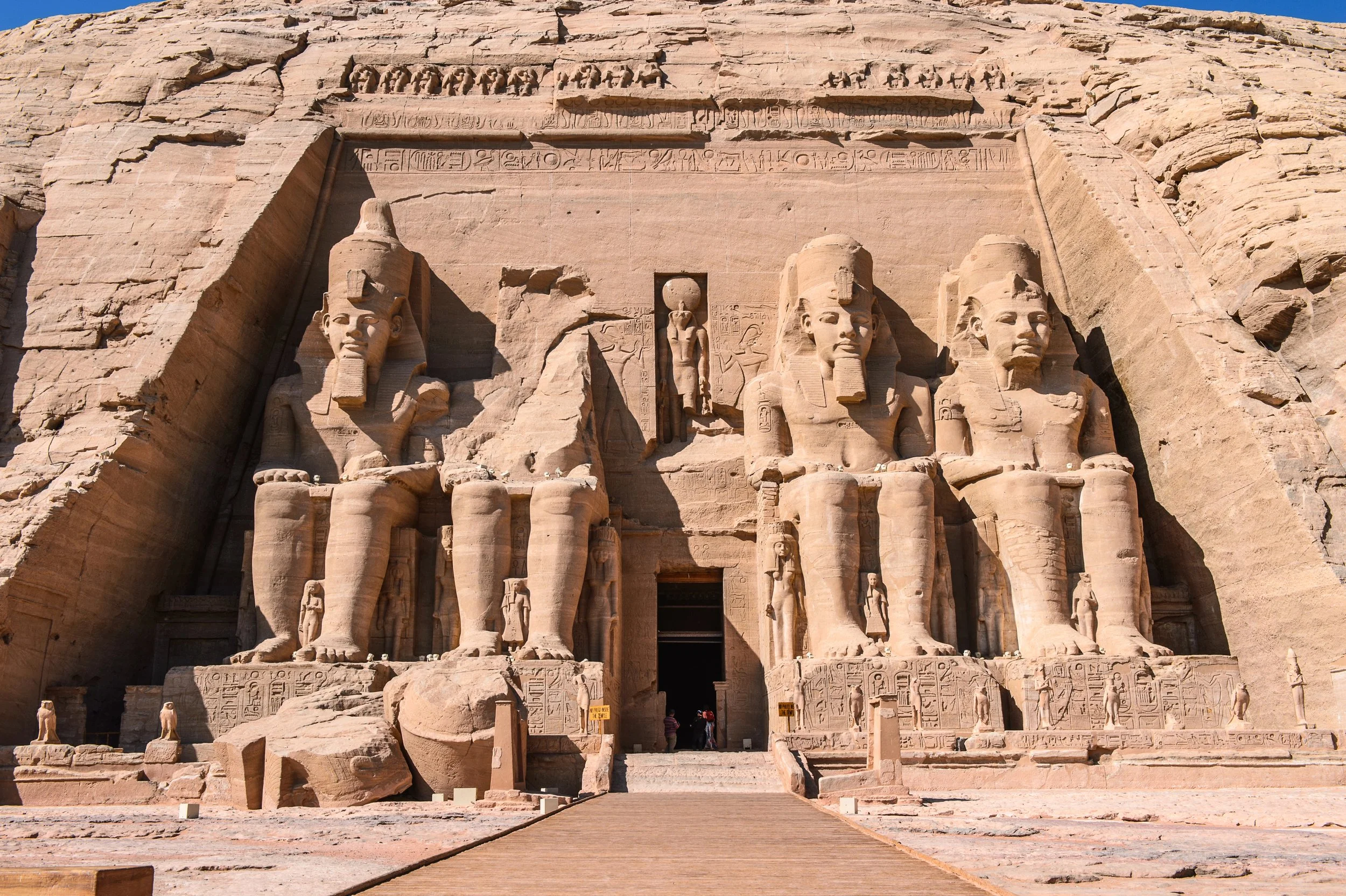
ASWAN: ABU SIMBEL TEMPLESThis excursion begins with a 5:00 AM road transfer from Aswan to Egypt’s southern border to visit one of the country's most marvelous archaeological sites. The complex features two amazing rock-cut temples: the Great Temple of Ramesses II and the Temple of Nefertari.
EXCLUSIONS
INTERNATIONAL TRANSITAll international flights to and from Egypt. This itinerary commences upon arrival at your designated Egyptian gateway and concludes with your international departure.
NATIONAL ENTRY & VISA FORMALITIESThe entry visa is the responsibility of the traveler and may be obtained online in advance (where eligible) or upon arrival.
Pre-arrival guidance is shared in advance. Visa and passport formalities are completed within the immigration hall, after which you will be met at the terminal exit.
For a fully managed arrival, with visa issuance and passport formalities handled on your behalf inside the restricted zone by a dedicated airport concierge, please refer to our VIP Fast-Track Arrival upgrade.
PERSONAL PROTECTIONComprehensive travel and medical insurance.
ELECTIVE EXPERIENCESSupplementary site visits, optional excursions, or personal expenditures not specifically detailed in the itinerary.