
FAYOUM
BLACK DESERT
WHITE DESERT BAHARIYA OASIS
A Crossing of Fossil Plains and Dune Corridors
4-DAY
ITINERARY
THE HEART OF THE EXPERIENCE
This 4-day crossing begins in Fayoum’s fossil fields and desert lakes, enters the long dune corridors of Ghoroud Abu Muharrak, reaches the remote basin surrounding Jarrah Cave, and continues through the chalk plains of the White Desert before ending in the volcanic landscapes of the Black Desert and the palms of Bahariya
Designed for travelers who value depth, clarity, and a sense of progression—those who prefer a journey that unfolds gradually rather than a collection of disconnected stops. It suits guests who appreciate geological variation, quiet space, and the feeling of moving through landscapes shaped by time.
It links Fayoum, Ghoroud Abu Muharrak, Jarrah Cave, the White Desert, the Black Desert, and Bahariya Oasis in one continuous movement across Egypt’s desert heartlands.
This experience centers on deep engagement with the desert: walking through dune systems, spending nights beneath open skies, and entering remote natural sites shaped by geological time. Across fossil plains, high dunes, limestone caves, chalk formations, crystal ridges, and volcanic hills, the landscape reveals its contrasts with quiet power — a setting that invites grounding, clarity, and a rare sense of inner stillness.
The rhythm is steady and balanced, with the first night spent in a quiet lodge before entering the more remote areas of the desert.
THE GEOGRAPHY
FAYOUM DESERT REGIONDima al-Sibāʿ
Petrified Forest
Wadi Al-Hitan
Magic Lake
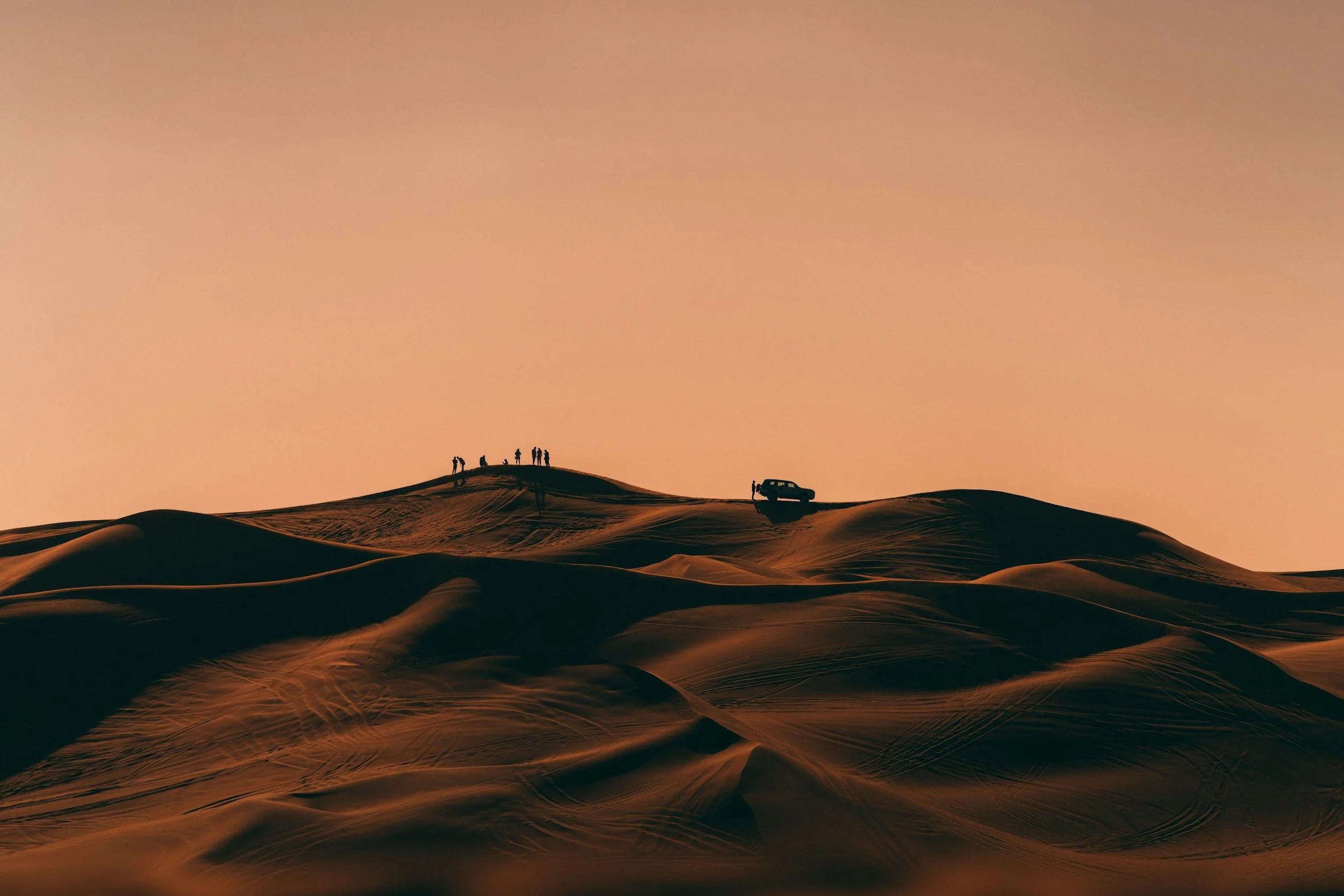
GHOROUD ABU MUHARRAKEgypt’s longest aligned dune system
Desert walking and dune landscapes
QUSUR EL ARAB AREADesert lodge stay
Dinner and night under the desert sky
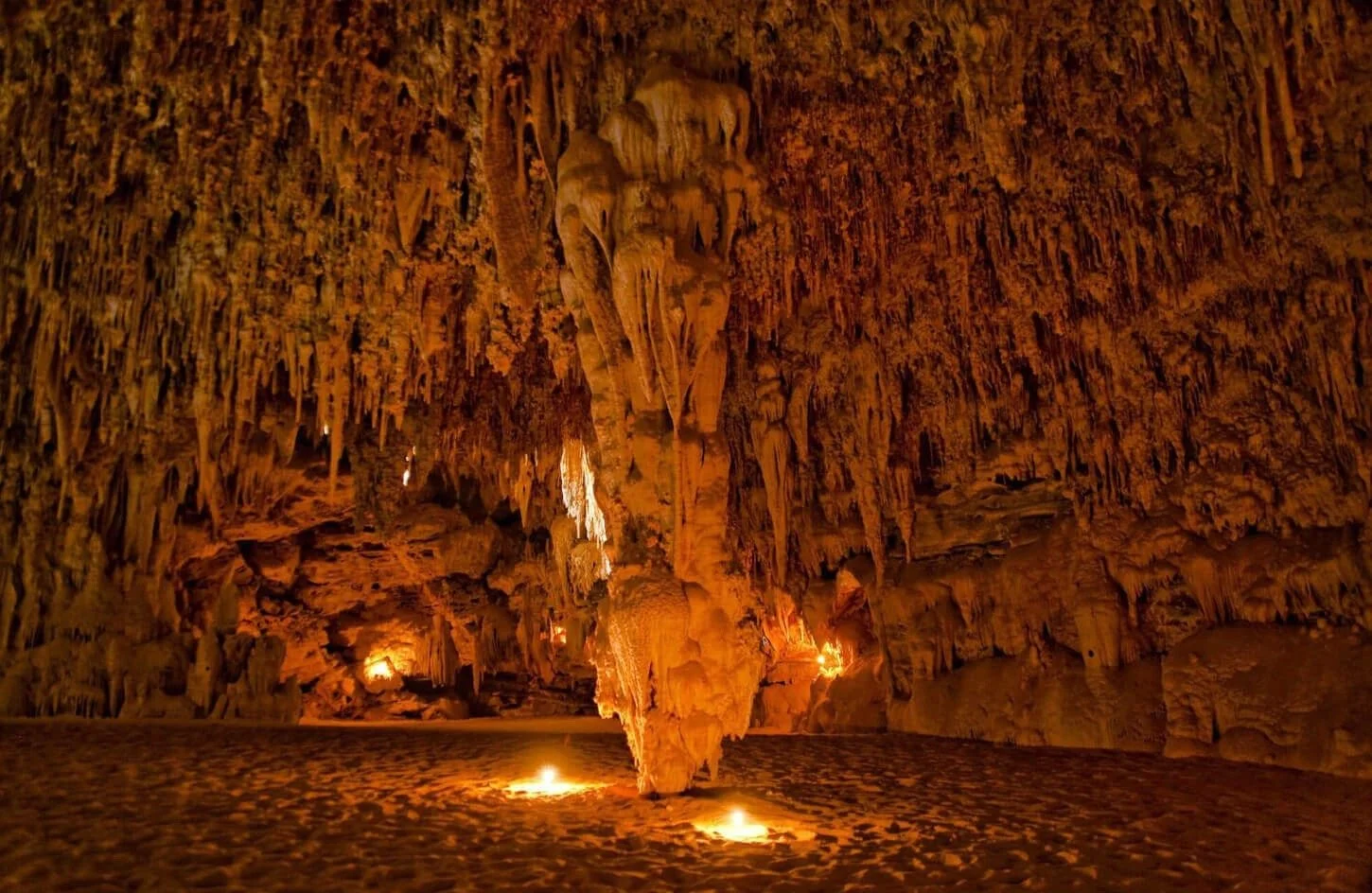
JARRAH CAVE REGIONRemote cave system deep inside the dunes
Walking routes within the dune field
CRYSTAL MOUNTAINCalcite formations of Crystal Mountain
EL HAIZESmall oasis blessed with a natural hot spring
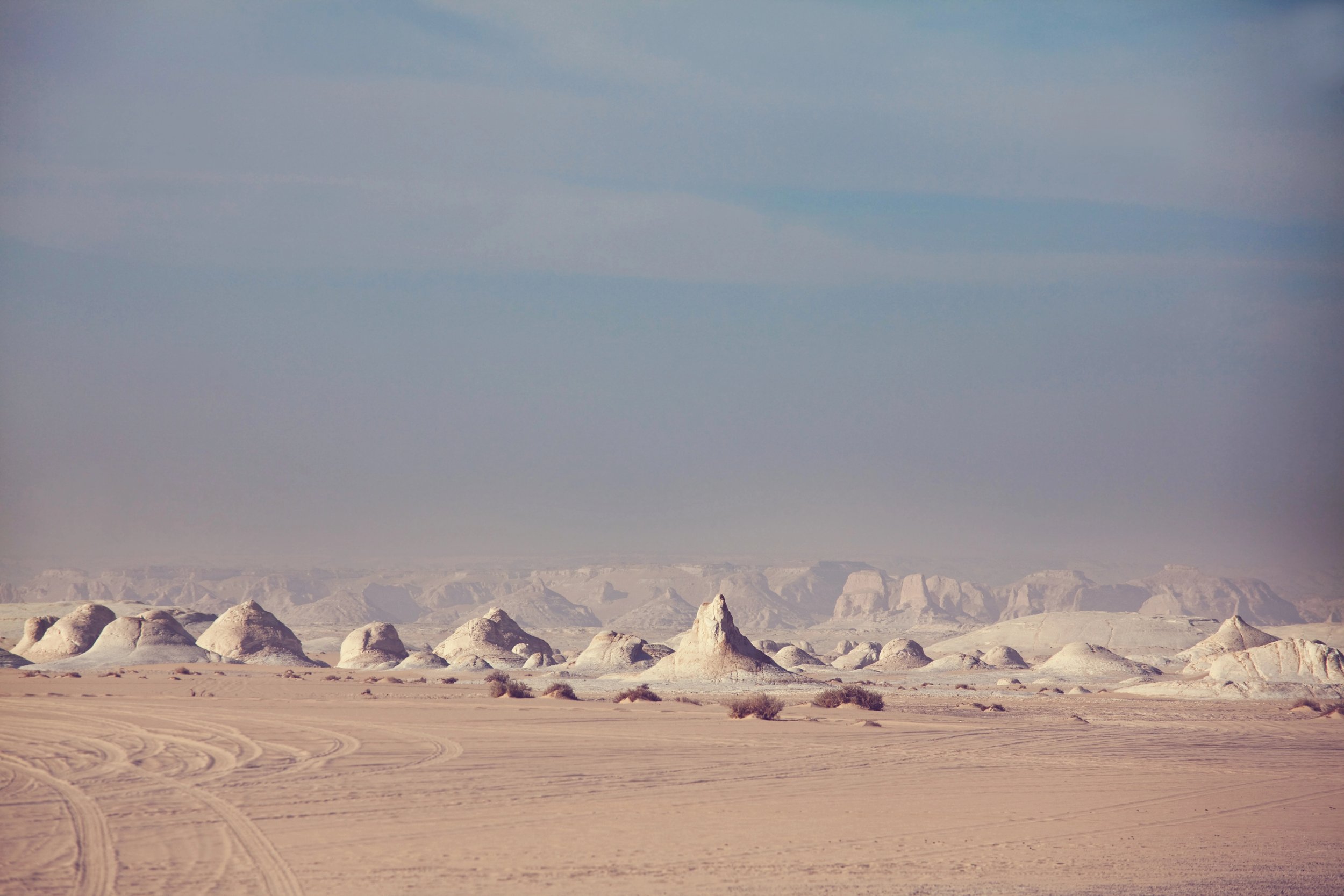
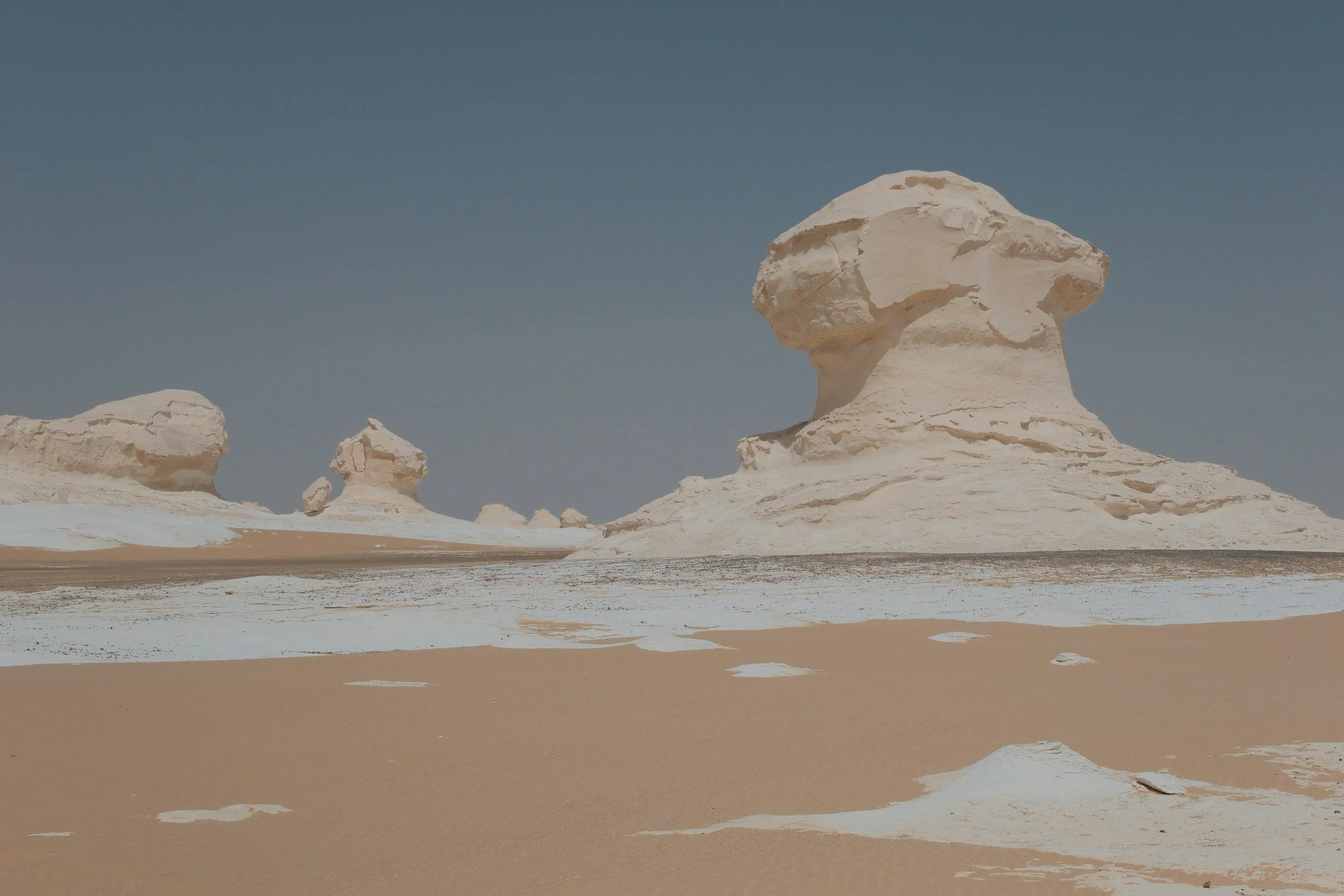
WHITE DESERTWind-carved chalk formations
Open landscapes and desert silence
Overnight camping or lodge stay
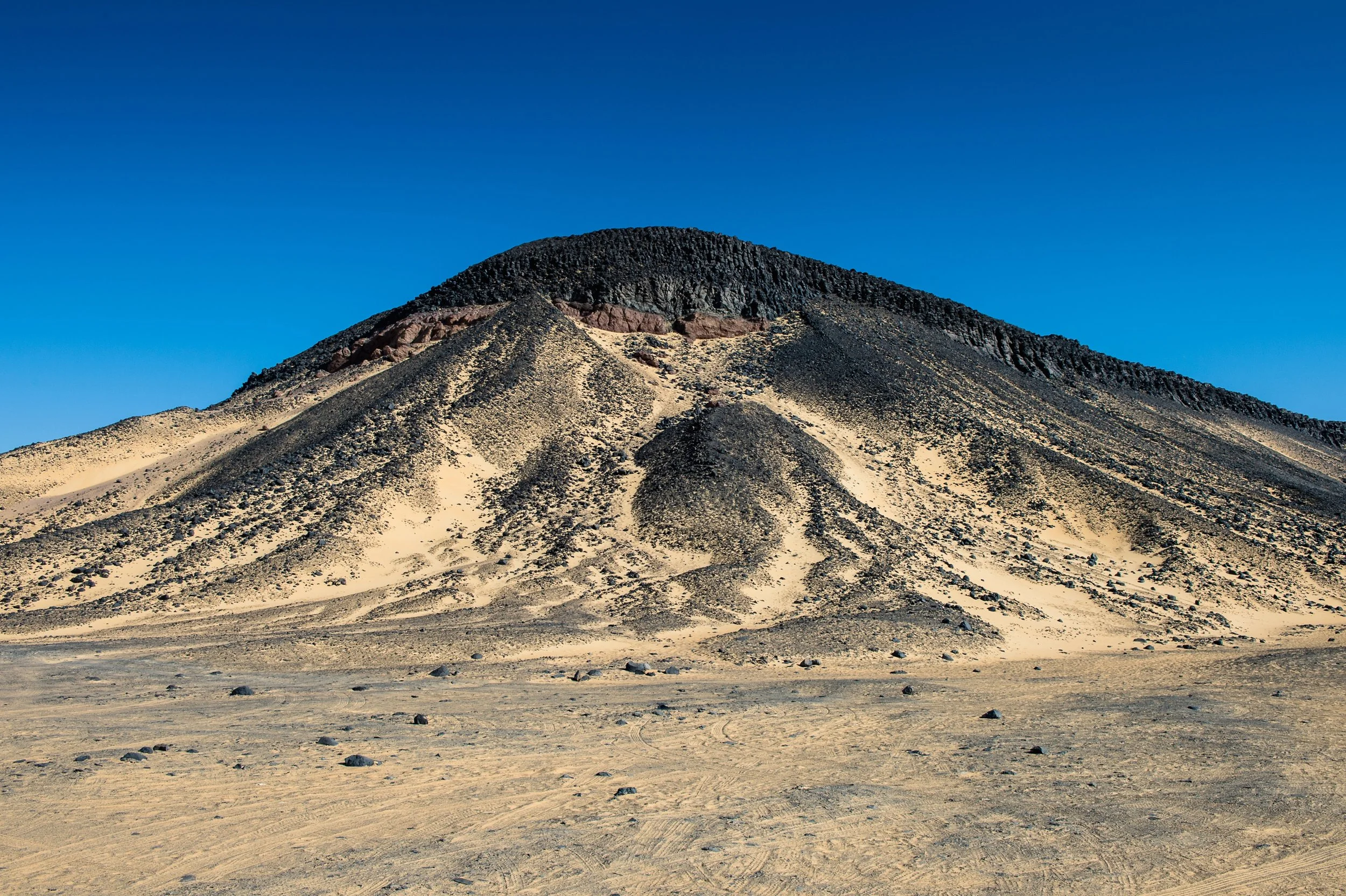
BLACK DESERTVolcanic hills and basalt-covered sand
Distinctive dark-topped cones from ancient activity
VALLEY OF AGABATDramatic limestone cliffs and narrow passes
Soft dunes contrasting with steep, sculpted formations
BAHARIYA OASISGolden Mummies Museum
26th-Dynasty tombs including Bannantiu
English House viewpoint over the oasis
DETAILED ITINERARY
-
Overview
The day unfolds from Fayoum’s cultivated basin into the desert’s deeper layers — from ancient settlements on the desert rim to fossil plains, shifting lakes, and the threshold of Egypt’s great dune systems. The route follows a natural progression: traces of early human presence, prehistoric forests turned to stone, and the vast open spaces surrounding Wadi Al-Hitan. By late afternoon, the landscape opens into the sweeping dunes of Ghoroud Abu Muharrak before you settle into your desert lodge for a quiet evening under open skies.Itinerary
Morning Pickup – From Your Fayoum Hotel
Begin the day with pickup from your hotel in Fayoum by private air-conditioned vehicle. Travel west through the cultivated basin toward the desert edge, where farmland and irrigation gradually give way to open, arid terrain.Vehicle Transition – Desert Edge
At the edge of the desert, change vehicles and continue the journey by private 4×4. This transition marks the shift from paved roads to off-road exploration, as the route moves beyond inhabited land and into older geological layers shaped by wind, sediment, and time.Drive Toward the Fayoum Desert Interior
Proceed deeper into the desert by 4×4, following routes that connect ancient settlement zones, fossil plains, lakes, and dune systems. The progression is gradual and logical — from human presence at the desert rim to the expansive, open environments surrounding Wadi Al-Hitan and the western dunes.Dima al-Sibāʿ
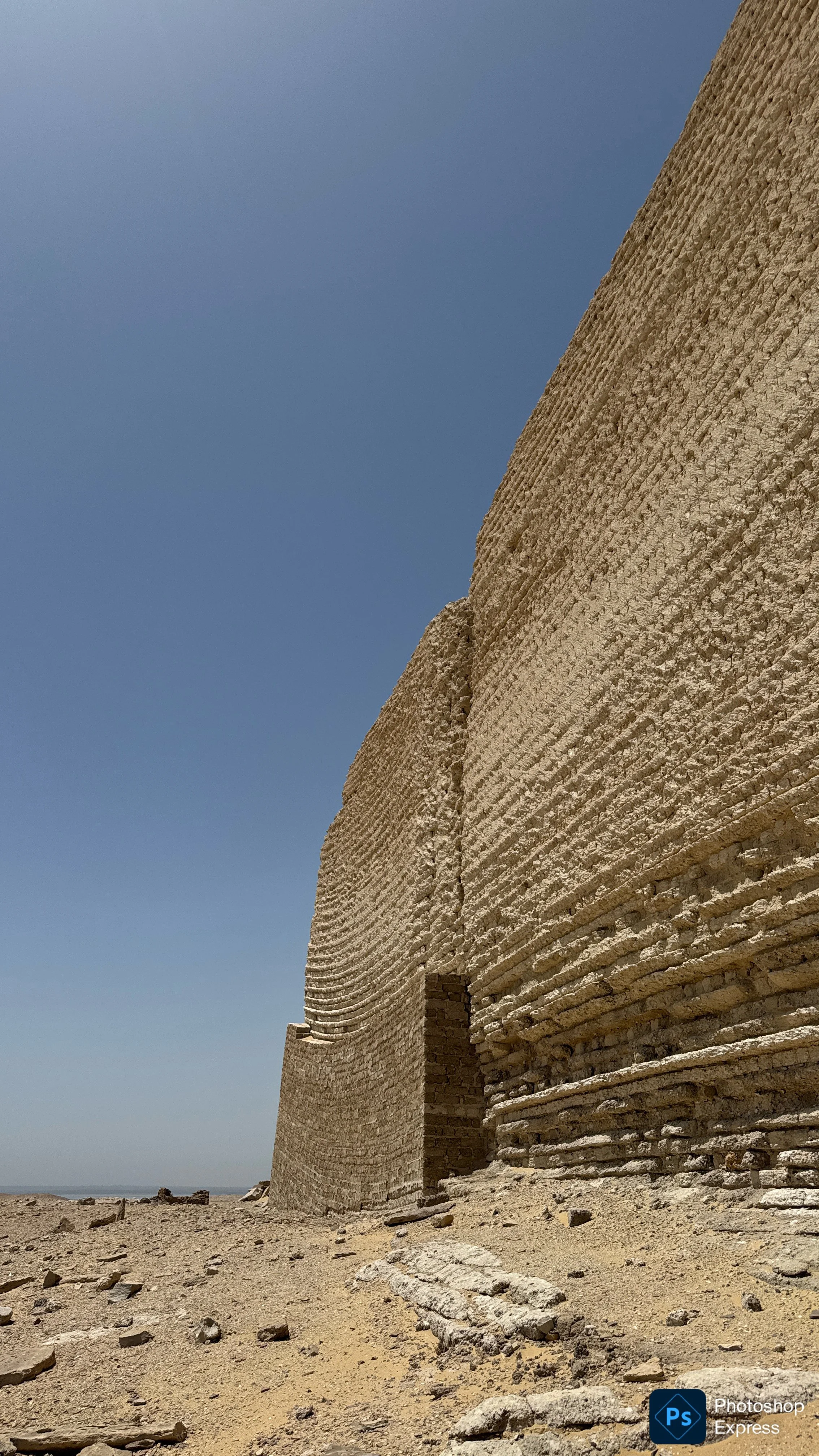
Explore the remains of Dima al-Sibāʿ, an ancient settlement positioned at the threshold between the cultivated Fayoum basin and the open desert. Its mud-brick buildings, scattered enclosures, and elevated viewpoints show how earlier communities controlled movement across this frontier. The site provides a clear sense of how human life once adapted to the desert edge — balancing agriculture, trade, and defense in a landscape that shifts quickly from fertile to arid.Petrified Forest
Walk across a plateau dotted with fossilized tree trunks, some lying intact, others fragmented by time. These remnants belong to a prehistoric forest that once stood here millions of years ago. The combination of mineralization, erosion, and exposure has created a natural open-air archive, allowing you to stand directly on evidence of ancient climates and ecosystems that long predate human history. It is one of the region’s most striking geological contrasts.Wadi Al-Hitan
Continue to Wadi Al-Hitan, the Valley of the Whales — a UNESCO World Heritage Site known for some of the world’s most important early whale fossils. Marked pathways guide you past skeletons preserved within the rock layers, offering a direct view of the natural processes that shaped this region over millions of years. The surrounding formations, shaped by wind, sedimentation, and long geological cycles, reveal a landscape where evolution and environment remain visibly connected. The experience is clear, grounded, and self-explanatory — no embellishment required.Lunch in the Desert
Enjoy a quiet lunch in an open desert setting, with uninterrupted views of the escarpments and the wide fossil plains. The break offers a moment to pause before entering the deeper dune systems of the afternoon.Magic Lake
Visit Magic Lake, known for the way its waters change color depending on sunlight, season, and mineral levels. The lake is framed by elevated ridges that provide natural viewpoints over the surrounding desert. It is one of the few places where water, sand, and rock appear together — creating a layered perspective on Fayoum’s geological structure.Ghoroud Abu Muharrak
Travel toward Ghoroud Abu Muharrak, the longest continuous dune system in Egypt. The dunes are defined by long, clean ridgelines, fine sand textures, and wide corridors shaped by prevailing winds. The area demonstrates how desert morphology evolves over time: shifting, accumulating, and forming large-scale patterns that are visible even from afar. It is a clear example of the structural beauty found in Egypt’s western dunes.Qusur El Arab – Dinner & Overnight
Arrive at your desert lodge in the Qusur El Arab area. The setting is simple, quiet, and surrounded by open land. Dinner is served at the lodge, followed by a night under clear desert skies — a calm end to a day structured around movement through ancient environments and natural formations.Meals: Lunch, Dinner
Overnight: Qusur El Arab lodgeVisits:
• Dima al-Sabaa
• Petrified Forest
• Wadi Al-Hitan
• Magic Lake
• Ghoroud Abu Muharrak
• Qusur El Arab -
Overview
A full day inside one of Egypt’s most dramatic dune systems — beginning with a morning walk toward the remote Jarrah Cave, continuing through the sweeping ridges of Ghoroud Abu Muharrak, and ending in the wider landscapes that lead toward the White Desert. The day unfolds entirely within open terrain: long dune corridors, shifting sand lines, limestone outcrops, and quiet horizons. It is a slow, immersive progression through environments that feel increasingly remote, leading into an evening of desert campfire, dinner, and clear night skies.Itinerary
Breakfast at Camp
Begin the morning with a fresh desert breakfast and a short briefing with your desert team. The early hours are calm and clear, making this the best time to move across open sand before temperatures rise.Hike Toward Jarrah Cave
Start a guided walk into the dune system, following gentle rises and long, soft corridors of sand. Jarrah Cave lies in a remote pocket of the dunes; the approach is part of the experience — wide, quiet, and shaped by the subtle curves of wind-formed ridges. Reaching the cave gives a sense of the depth and age of this landscape.Lunch in the Dunes
Pause for lunch in a sheltered dune basin. The setting is simple and atmospheric: high dunes creating natural walls, open sky above, and a stillness that defines the region.Trekking Through Ghoroud Abu Muharrak
Continue deeper into Ghoroud Abu Muharrak, one of Egypt’s longest and most structured dune chains. Walking here highlights the geometry of the desert — long parallel ridges, clean sand lines, and horizons that shift slowly as you move. The silence is complete, offering a clear sense of scale and distance.Journey Toward the White Desert & Agabat Sahrawia
Rejoin your 4×4 vehicles and travel toward the White Desert region. The route passes through Agabat Sahrawia, where limestone formations rise abruptly from the sand, forming natural corridors and open amphitheaters. This transitional zone marks the shift from dune landscapes to the chalk plateaus that characterize the White Desert.Desert Camp
Arrive at your camp location and settle into the evening rhythm of the desert. Dinner is prepared on-site by the desert team. Nightfall brings a level of clarity rarely found elsewhere: bright stars, quiet air, and wide open space — a natural conclusion to a day spent fully inside the desert.Meals: Breakfast, Lunch, Dinner
Overnight: Desert camp in the White Desert regionVisits:
• Jarrah Cave
• Ghoroud Abu Muharrak
• Agabat Sahrawia
• Desert camp area -
Overview
Enter the heart of the White Desert, moving from soft dune landscapes into the chalk plains that define this region. The day focuses on slow, grounded exploration — walking among wind-sculpted formations, observing the scale and quiet of the open plateau, and settling into camp near the desert mangroves. The shift in terrain is clear and gradual, giving a sense of progression as the environment changes from sand to stone, from enclosed dunes to broad white horizons.Itinerary
Morning Stop at Jarrah Cave
A brief opportunity to revisit Jarrah Cave in daylight. The morning light reveals the textures and natural contours of the cave more clearly, allowing a calm, measured start before moving into the chalk plateau.Enter the White Desert
Continue by 4×4 into the White Desert, where the terrain shifts from dunes to solid chalk. The approach is gradual — sand thins out, the ground becomes pale, and isolated formations begin to rise out of the flat horizon. This transition marks the entrance into one of Egypt’s most distinctive natural areas.Walking Tour Through the White Desert
Walk among the formations shaped naturally by wind: mushroom structures, animal-like silhouettes, and compact ridges formed through thousands of years of erosion. The walk is unhurried, allowing the environment to be experienced at scale — its quiet, its openness, and the clarity of the desert light.Camp Beside the Desert Mangroves
Set up camp near the desert mangrove area, an unexpected pocket of vegetation within the White Desert region. Dinner is prepared on-site by the desert team, and the evening unfolds in stillness — soft light, wide sky, and a landscape that feels entirely removed from inhabited space.Meals: Breakfast, Lunch, Dinner
Overnight: Desert camp in the White DesertVisits:
• Jarrah Cave
• White Desert National Park
• Desert Mangroves -
Overview
Cross the final stretch of the Western Desert as the landscape shifts from chalk plains to mineral ridges and volcanic fields. The route moves through Crystal Mountain, a natural outcrop of quartz and calcite, continues across the dark basalt hills of the Black Desert, and concludes in the palm-filled basin of Bahariya Oasis. This day brings the desert journey to a coherent close — the last sequence of contrasting terrains before re-entering the Nile Valley and returning to Cairo.Itinerary
Breakfast at Camp
Begin the morning with a quiet desert breakfast. The early light softens the chalk formations around you, creating a calm, open setting that marks the final hours of your White Desert stay. It is a simple but grounding moment before the day’s movement begins.Crystal Mountain
Stop at Crystal Mountain, a natural ridge composed of calcite crystals that formed under immense geological pressure. The exposed veins shimmer under direct sunlight, creating the impression of a fractured, glittering arch set in the middle of the desert. Though often referred to as a “mountain,” it is in fact a mineral-rich outcrop — one of the region’s most unusual formations, where crystals embedded in the rock catch and scatter the light in a way that feels almost otherworldly.Lunch in the Desert
Pause for lunch in a secluded area of the desert, chosen for its natural shelter and clear views. The meal is uncomplicated and freshly prepared, offering a brief, quiet break in the middle of the day’s shifting landscapes — a chance to rest, rehydrate, and take in the scale of the surrounding environment.Black Desert
Move across volcanic plains where ancient eruptions left hills capped with dark basalt. The contrast of black peaks rising from pale sand creates one of the Western Desert’s most dramatic landscapes.El Haize Oasis
Pause in this quiet desert outpost known for its natural hot spring and clusters of palms — a small, green rest point on the way toward deeper desert terrain.Arrival in Bahariya Oasis
Enter Bahariya’s green basin, where palm groves, springs, and low ridges form the first settled environment after days in remote desert terrain. This marks the natural end of the desert expedition, where you will change from the desert 4×4 to a standard private vehicle arranged for long-distance travel. This ensures a comfortable and efficient return to the city.Drive from Bahariya Oasis to Cairo
Begin the drive back to Cairo in your private air-conditioned vehicle, leaving the desert behind as the terrain gradually shifts toward the Nile Valley.Arrival in Cairo
Upon reaching the capital, settle into your hotel for a relaxed evening. The time is yours — whether to rest, enjoy dinner, or simply let the experiences of the oasis and desert settle in.Meals: Breakfast, Lunch
Overnight: —Visits:
• Crystal Mountain
• Black Desert
• Bahariya Oasis
THE ROUTE ON THE MAP
Important NoteDesert routes may change due to weather, road conditions, or safety considerations. Your guide will make adjustments only when necessary, ensuring your comfort and safety while preserving the essence and highlights of the itinerary.
INCLUSIONS
GUIDING & EXPERTISEPrivate English-Speaking Egyptologist Guide
Professional Private Local Desert Guide
TRANSPORTATION & LOGISTICSDedicated private driver throughout the journey
All transfers in a private air-conditioned vehicle
4×4 vehicles for all off-road travel
ACCOMMODATION & STAY OVERVIEW1 night in the Qusur El Arab area
Desert camping or desert lodge
Half Board
2 nights in the White Desert region
Desert camp
Full Board
MEALS & CULINARY INCLUSIONSMeals are included as outlined in the itinerary
SELECTED DESERT & OASIS LODGESQusur El Arab area — Desert camping or desert lodge
White Desert: Private overnight desert camping or lodge
ACCESS & SERVICESEntrance fees to all archaeological sites and museums mentioned in the itinerary
Bottled water is provided during all guided tours and private transfers
All service charges and government taxes
EXCLUSIONS
INTERNATIONAL TRANSITAll international flights to and from Egypt. This itinerary commences upon arrival at your designated Egyptian gateway and concludes with your international departure.
NATIONAL ENTRY & VISA FORMALITIESThe entry visa is the responsibility of the traveler and may be obtained online in advance (where eligible) or upon arrival.
Pre-arrival guidance is shared in advance. Visa and passport formalities are completed within the immigration hall, after which you will be met at the terminal exit.
For a fully managed arrival, with visa issuance and passport formalities handled on your behalf inside the restricted zone by a dedicated airport concierge, please refer to our VIP Fast-Track Arrival upgrade.
PERSONAL PROTECTIONComprehensive travel and medical insurance.
ELECTIVE EXPERIENCESSupplementary site visits, optional excursions, or personal expenditures not specifically detailed in the itinerary.