
CAIRO
ST. CATHERINE
MOUNT SINAI
SHARM EL SHEIKH
Tracing the Pathways of
the Exodus
8-DAY
ITINERARY
THE HEART OF THE EXPERIENCE
A private, 8-day journey through Egypt’s spiritual and desert landscapes, moving from Cairo to Mount Sinai, St. Catherine, and the Red Sea, designed for travelers seeking reflection, continuity, and an unhurried pace. It begins in Cairo, Egypt’s historic capital and the gateway to its deepest archaeological layers, where monumental sites — the pyramids and Sphinx at Giza, the funerary innovations of Saqqara, and the vast collections of the Grand Egyptian Museum — establish a clear intellectual foundation before the route turns east toward landscapes tied to early biblical tradition.
Designed for travelers who prefer clarity, authenticity, and calm pacing — those who want a meaningful route that connects land, history, and narrative without being rushed or overloaded. It focuses on creating a direct connection to place: Egypt’s ancient urban foundations, the desert waypoints of the Exodus tradition, monastic history in the Sinai highlands, and the quiet clarity of the Red Sea.
The route includes the traditional Exodus waypoints of Marah, Elim, the Desert of Sin, and Rephidim — landscapes where narrative, history, and geography intersect. These locations are approached as open, spacious environments rather than quick stops, allowing their natural features to speak for themselves. Springs, ridges, and wide desert corridors form the physical setting for the stories associated with this region, while the steady movement between each area gives travelers time to absorb the terrain, sense its scale, and appreciate the continuity between environment and tradition.
It focuses on the spiritual and historical depth of each location: the springs of Marah and Elim, the wilderness regions associated with the Exodus, the ascent of Mount Sinai, the heritage of St. Catherine Monastery, and the quiet coastline of Sharm El Sheikh. Each place is approached in a way that balances atmosphere with clarity, allowing travelers to understand the cultural, scriptural, and geographical significance of every stop.
The journey is structured, meaningful, and spacious — connecting Cairo’s archaeological foundations with the desert waypoints of the Exodus, the monastic world of St. Catherine, and the clarity of the Red Sea coast. It allows guests to understand where they are, why each place matters, and how each landscape fits into a continuous narrative from ancient civilization to sacred geography.
THE GEOGRAPHY
CAIRO • GIZAPyramids of the Giza Plateau
Great Sphinx
Valley Temple
Grand Egyptian Museum
Saladin Citadel
Muhammad Ali Mosque
Mosque of al-Nasir Muhammad
Khan el-Khalili
Islamic Cairo atmosphere
SAQQARASaqqara Necropolis
Step Pyramid of Djoser
MARAHArea associated with the first springs reached after crossing the sea
Landscape of wells, palm clusters, and early settlement points
ELIMOasis of the Twelve Springs
DESERT OF SINWilderness corridor connected with the manna and quail tradition
Broad sand plains and rocky outcrops along the ancient route
REPHIDIMTraditional site of Moses’ supported hands during battle
Wadi systems and high desert ridges linked to early narratives
ST. CATHERINE & MOUNT SINAI Sunrise ascent of Mount Sinai
St.Catherine Monastery
The Burning Bush
Moses’ Well
SHARM EL SHEIKHRed Sea coastline
Quiet resort environment for rest and reflection
DETAILED ITINERARY
-
Welcome to Egypt 🇪🇬 ☀️
Overview
Your story begins in Cairo. We have kept this day intentionally gentle, giving you space to breathe, settle in, and let the realization that you have arrived in the land of the Pharaohs slowly sink in.Itinerary
Private Transfer to Hotel
You are welcomed on arrival at Cairo International Airport and transferred privately to your 5-star hotel.Hotel Check-in & Orientation
After reaching your hotel, your tour manager assists with check-in and walks you through the itinerary, confirming pickup times and logistics for the days ahead.Meals: —
Overnight: CairoVisits: —
-
Overview
A full day devoted to Egypt’s earliest monumental landscapes — the desert plateau of Giza, where the pyramids and Sphinx define the age of the pharaohs, and Saqqara, where Egypt’s first experiments in stone architecture reshaped the history of royal burial. The day moves between scale and origin: standing before the last surviving Wonder of the Ancient World, then tracing the beginnings of pyramid construction at Djoser’s Step Pyramid. It combines the most iconic symbols of ancient Egypt with the deeper architectural and ideological roots that made them possible.Itinerary
Morning Pickup – From Your Hotel
Begin the day with pickup from your hotel, where your guide and driver meet you for departure toward Egypt’s earliest pyramid landscapes.Pyramids of the Giza Plateau
Visit the Great Pyramid of Khufu together with the pyramids of Khafre and Menkaure, exploring the architectural precision, symbolism, and desert setting that shaped the foundations of Old Kingdom kingship.Panoramic Views and Photo Stops
Enjoy key viewpoints over the plateau where all three pyramids align against the desert horizon.Valley Temple and Great Sphinx
Visit the Valley Temple of Khafre, built from massive limestone blocks and used for royal ritual. Stand before the Great Sphinx, carved directly from the natural bedrock and guarding the entrance to the plateau.Saqqara Necropolis
Continue to Saqqara—Egypt’s oldest royal burial ground. This vast desert plateau holds tombs, mastabas, and monuments spanning thousands of years, offering a clear view of how ancient funerary traditions evolved long before the Giza pyramids were built.The Step Pyramid of King Djoser
Enter the Egypt’s first monumental stone structure and the earliest pyramid in history. Designed by the architect Imhotep, it marks the beginning of Egypt’s pyramid age and represents one of the most influential innovations in ancient architecture.Return to Hotel
Settle into your private transfer back to your hotel in Cairo for a relaxed evening at leisure.Meals: Breakfast
Overnight: CairoVisits:
• Giza Pyramids
• Great Sphinx
• Valley Temple
• Saqqara Necropolis
• Step Pyramid of Djoser -
Overview
Immerse yourself in Cairo’s cultural and architectural heritage through three of its most defining landmarks: the Grand Egyptian Museum, the Citadel of Saladin, and the historic quarters surrounding Khan el-Khalili. The day balances depth and atmosphere — from viewing Egypt’s most significant archaeological collections, to standing within the city’s great medieval fortress, to walking through the narrow lanes of Islamic Cairo where centuries of craftsmanship, trade, and daily life are still visible.Itinerary
Morning Pickup – From Your Hotel
Begin the day with pickup from your hotel, where your guide and driver meet you for departure toward Cairo’s cultural and historic core.Grand Egyptian Museum
Visit the Grand Egyptian Museum, home to an unparalleled collection of artifacts, including the complete treasures of Tutankhamun, monumental statues, and masterpieces spanning pharaonic history.Citadel of Saladin
Enter Cairo’s great medieval fortress, founded in the 12th century by Salah al-Din (Saladin) — one of the most influential military and political figures of the Middle Ages. From this commanding position atop Mokattam Hill, Saladin reshaped Cairo’s defenses, establishing a fortified seat of power whose walls, gates, and terraces still define the skyline. Within this enclosure, dynasties that followed added their own mosques, palaces, and ceremonial spaces, creating a layered architectural record that spans the Ayyubid, Mamluk, and Muhammad Ali eras.Muhammad Ali Mosque
Built between 1830 and 1848 under Muhammad Ali Pasha, this landmark adopts Ottoman-inspired design while representing Egypt’s own 19th-century ambition. Its alabaster interiors, high domes, and expansive terrace form one of the city’s most recognizable silhouettes, offering wide views across Cairo.Mosque of al-Nasir Muhammad
Completed in 1318, this Mamluk royal mosque functioned as the Citadel’s central congregational mosque, hosting the sultans for the weekly Friday prayer — the most important communal service in Islam. Its green-tiled dome, finely carved stucco, and elegant minarets offer a direct connection to Cairo’s medieval architectural core and the Citadel’s earlier period of dynastic rule.Khan el-Khalili & Islamic Cairo Atmosphere
Stroll through the vibrant bazaar and the surrounding historic lanes where artisans, cafés, and workshops sit within centuries-old architecture. This area captures the lived texture of Islamic Cairo, full of movement, color, and traditional craftsmanship.Return to Hotel
Settle into your private transfer back to your hotel in Cairo for a relaxed evening at leisure.Meals: Breakfast
Overnight: CairoVisits:
• Grand Egyptian Museum
• Saladin Citadel
• Muhammad Ali Mosque
• Mosque of al-Nasir Muhammad
• Khan el-Khalili -
Overview
Travel east from Cairo into the landscapes associated with the earliest stages of the Exodus narrative. This day moves from cultivated land into widening desert corridors, visiting spring sites, wilderness plains, and high ridges traditionally linked to the journey toward Sinai. The focus is clarity and context — understanding how geography, terrain, and ancient routes shaped the stories connected to Marah, Elim, the Desert of Sin, and Rephidim — before reaching the highlands surrounding St. Catherine.Itinerary
Early Morning Pickup – From Your Hotel
Begin the day with early morning pickup from your hotel, departing east toward the desert landscapes associated with the Exodus route.Marah
Visit the area traditionally associated with Marah, described as the first water stop after crossing into the wilderness. The name refers to water that was considered “bitter,” meaning difficult or unsuitable for drinking. Today, the landscape includes a series of small wells and shallow basins that show how scarce and unreliable water sources could be along early desert routes. Marah gives a factual sense of the challenges travelers faced and why such locations became significant reference points in historical narratives.Elim
In the biblical account, Elim is described as an oasis with “twelve springs and seventy palm trees,” a phrasing that likely reflected the oasis’ abundance and its suitability as a rest point for traveling groups. Today, the region contains clusters of natural springs, palm groves, and small basins that mirror how an ancient oasis would have supported water collection, shade, and temporary settlement. The phrase is kept not for symbolism, but because it anchors Elim’s historical role as a reliable and welcoming water source along the route.Desert of Sin
The Desert of Sin refers to a broad wilderness corridor between Elim and the Sinai highlands. It is the setting for the account of manna and quail, and its geography explains that tradition clearly: expansive sand plains, low ridges, and uninterrupted horizons where nomadic groups would have moved slowly between water points. It offers a sense of the scale, exposure, and emptiness that shaped the early journey.Rephidim
Rephidim is traditionally associated with two key moments: the lack of water and the battle with the Amalekites, during which Moses’ raised hands determined the outcome. The landscape today consists of intersecting wadis, stone terraces, and elevated viewpoints, giving a realistic picture of how groups might have gathered, camped, and defended themselves in these natural formations. It provides one of the clearest geographical contexts for understanding the narrative.Arrival in St. Catherine
Reach the basin surrounding St. Catherine, where the desert terrain narrows into a sheltered highland area at the foot of the mountains. This shift in landscape prepares the rhythm of the journey for the ascent of Mount Sinai the next morning.Meals: Breakfast, Dinner
Overnight: St. CatherineVisits:
• Marah
• Elim
• Rephidim
• Desert of Sin -
Overview
A day shaped by scale, silence, and sacred history. Before dawn, you ascend Mount Sinai — a summit long associated with revelation and spiritual encounter — reaching the peak as the first light unfolds across the surrounding mountains. After the descent, the focus turns to the monastic world of St. Catherine: an enclosed sanctuary of manuscripts, icons, and ancient traditions preserved for more than 1,500 years. The day concludes with a complete shift in atmosphere as you travel toward the Red Sea, where the quiet desert is replaced by open coastline and a more relaxed rhythm.Itinerary
Mount Sinai Sunrise Ascent
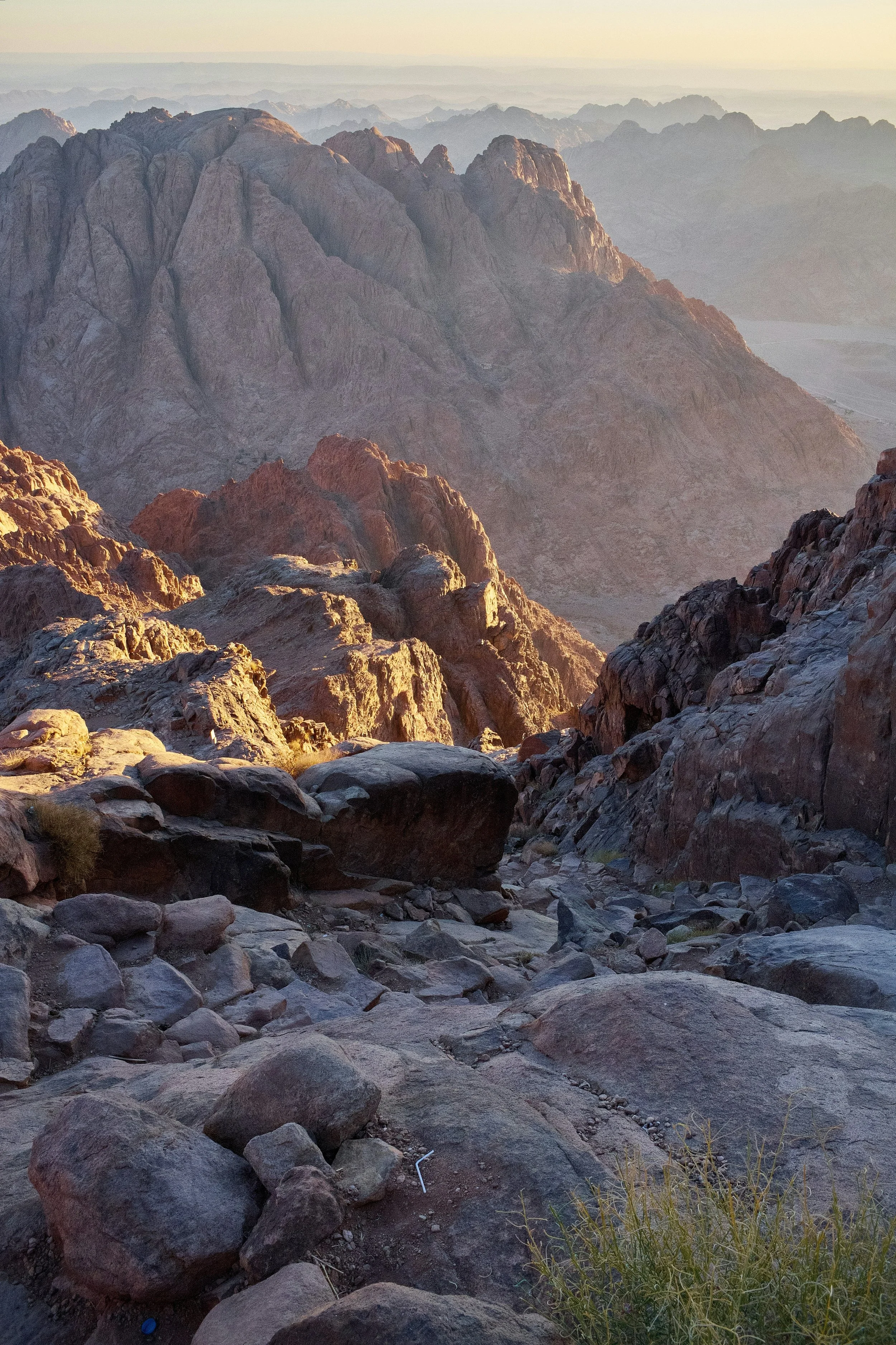
Begin the climb before dawn, moving through the mountain paths in the cool early hours. Reaching the summit at sunrise offers a clear and unobstructed view of the surrounding ranges — a landscape of granite peaks, deep valleys, and shifting light. The ascent is not rushed; the experience is focused on the calm, the elevation, and the sense of arriving into a space long considered sacred.St. Catherine Monastery
Enter the fortified enclosure of St. Catherine Monastery, one of the world’s oldest continuously operating Eastern Orthodox monastic communities. Its position at the base of the granite mountains creates an atmosphere that is restrained, quiet, and deeply rooted in history. Inside the walls, chapels, courtyards, gardens, and monastic quarters reflect a religious tradition that has continued uninterrupted for more than fifteen centuries. The architecture is functional rather than decorative, shaped by the needs of isolation, protection, and prayer. Taken together, the landscape and the enclosure form a self-contained world — a place where early Christian practice, survival in the desert, and long-term preservation of sacred knowledge all converged.The Burning Bush
Visit the site traditionally identified as the Burning Bush — preserved within the monastery walls and considered the spiritual core around which the monastic settlement was founded.Moses’ Well
Within the monastery grounds lies Moses’ Well, a freshwater source that has supported life in this valley for centuries. Long before the monastery was built, the well enabled early communities and travelers to remain in an otherwise severe desert environment. Its survival into the present—still functioning within the monastery walls—illustrates why this location became a focal point for settlement, worship, and continuity. The well anchors the monastery to a far older history: a reminder that spiritual centers often grew around places that first sustained human life.Manuscripts & Icon Rooms
Within the monastery’s inner buildings are the manuscript and icon rooms, housing one of the most significant collections of early Christian texts in the world. The holdings reflect the intellectual life of Eastern Christianity — biblical manuscripts, patristic writings, liturgical books, and theological works preserved in Greek, Arabic, Syriac, and other early Christian languages. These spaces illustrate how the monastery functioned not only as a place of devotion, but also as a center of scholarship that safeguarded Christian learning for more than fifteen centuries.Drive to Sharm El Sheikh
Travel south across the Sinai Peninsula toward the Red Sea. The terrain gradually shifts from high mountains to open desert corridors and finally to the coastline. Upon arrival in Sharm El Sheikh, check in at your resort for an evening of rest.Meals: Breakfast, Dinner
Overnight: Sharm El SheikhVisits:
• Mount Sinai
• St. Catherine Monastery
• The Burning Bush
• Moses’ Well -
Overview
A full day designed for rest. The Red Sea offers calm water, warm air, and space to slow down after the Sinai journey. Whether you choose to stay by the sea or join an optional marine excursion, the pace is intentionally light.Itinerary
Leisure Time in Sharm El Sheikh
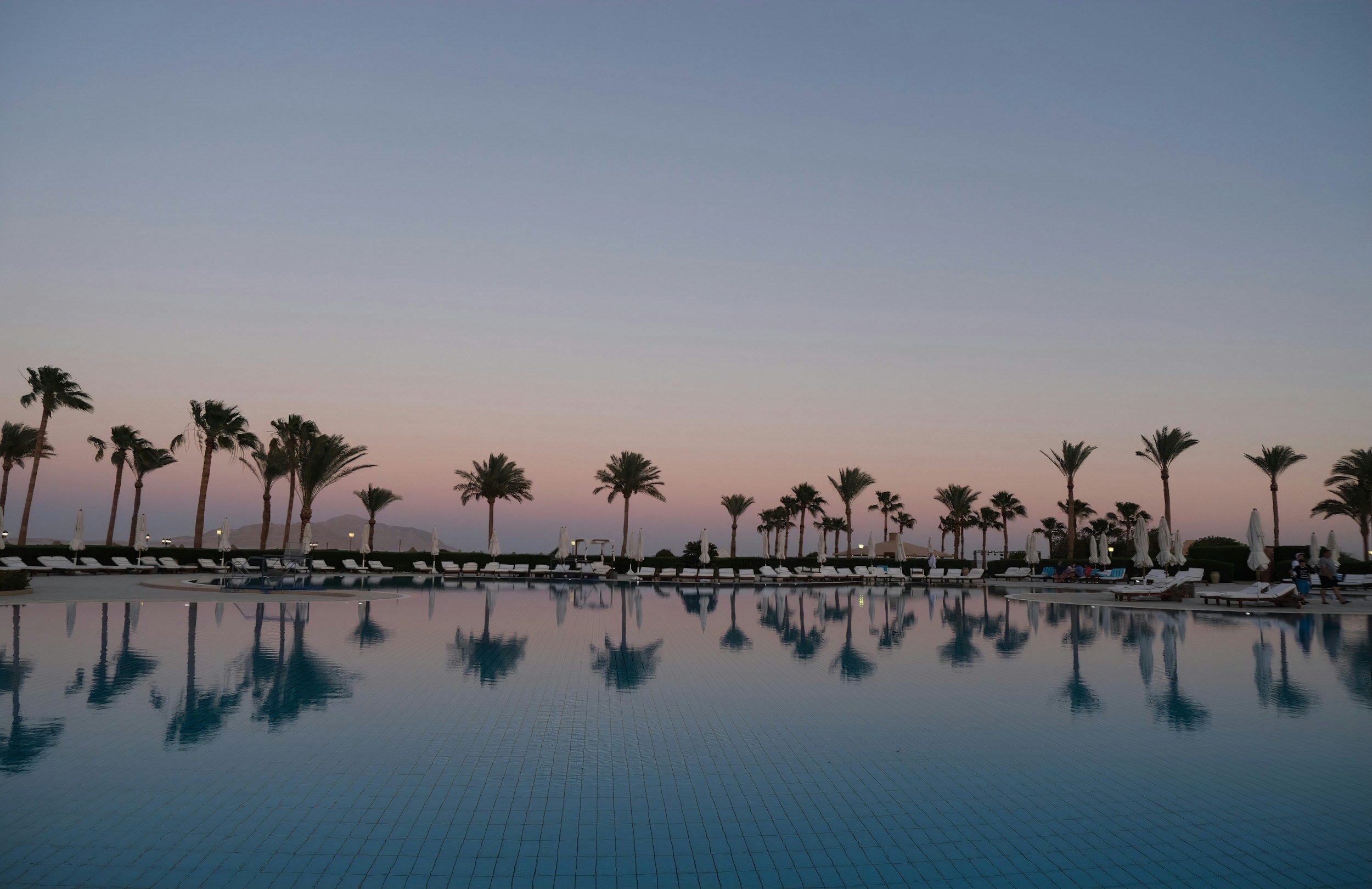
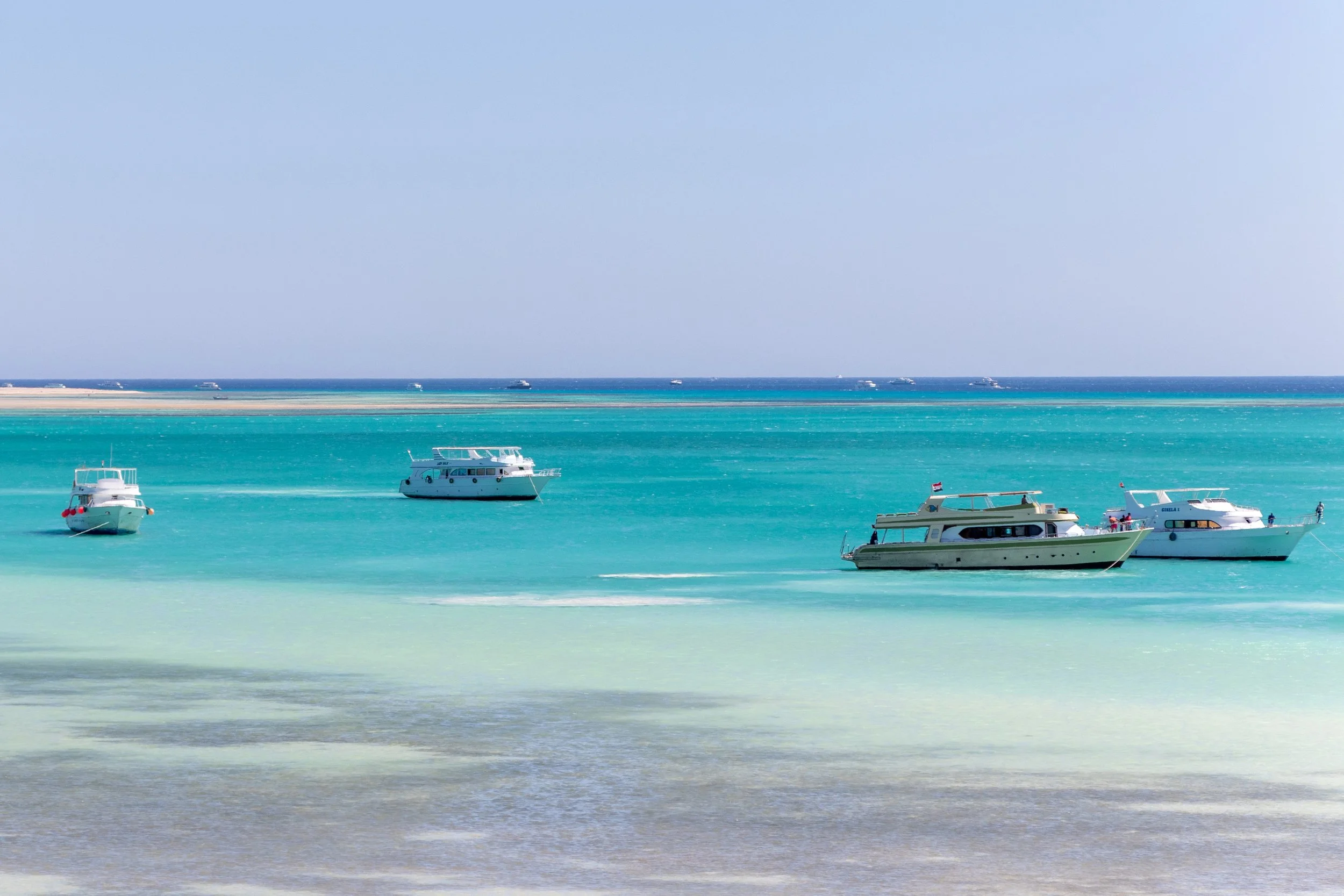
Spend the day as you prefer — swimming, reading, enjoying the coastline, or simply allowing the body and mind to settle after days of travel and exploration. Resorts in Sharm offer quiet corners, shaded terraces, and easy access to the water.Optional Experience: Ras Mohammed National Park
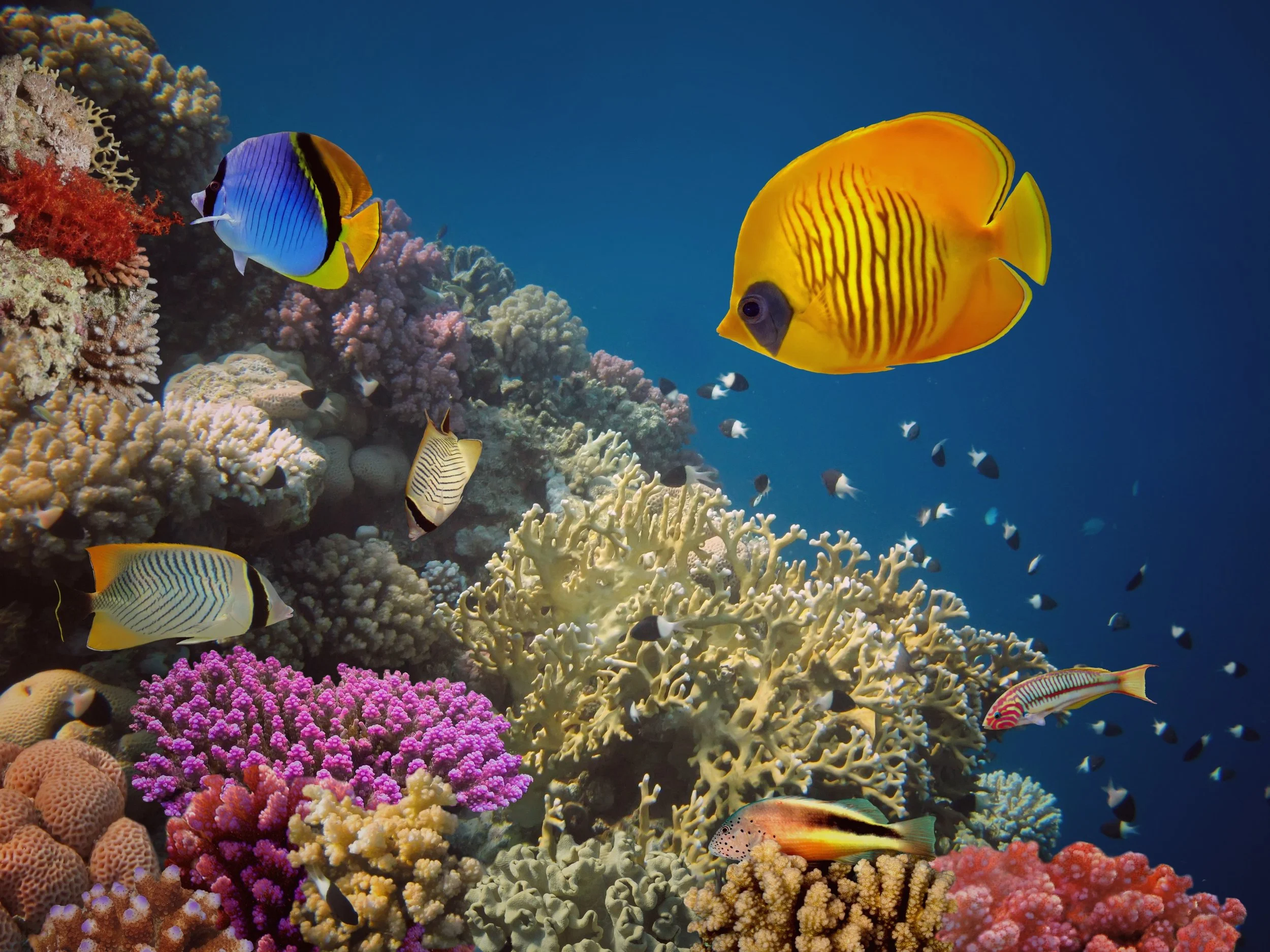
For those who wish to explore, Ras Mohammed offers one of the most striking marine environments in Egypt. Coral shelves, lagoons, and clear turquoise water make it ideal for snorkeling. The experience is accessible, visually rich, and suitable even for those with no prior snorkeling experience.Meals: All Inclusive
Overnight: Sharm El SheikhVisits: —
-
Overview
Return to Cairo for a final evening in the capital. After days shaped by movement, landscapes, and layered histories, this day shifts intentionally into a lighter rhythm. The transition from the Red Sea to the city gives space to decompress, restore your pace, and process the breadth of the journey so far. The evening in Cairo is open by design — a quiet pause before departure, with room to rest or enjoy the city in a way that feels natural and unhurried.Itinerary
Morning at Leisure
Begin the day slowly. Whether by the sea, at the pool, or simply resting, this quiet morning creates a natural pause after the Sinai and Red Sea days.Drive from Sharm El Sheikh to Cairo
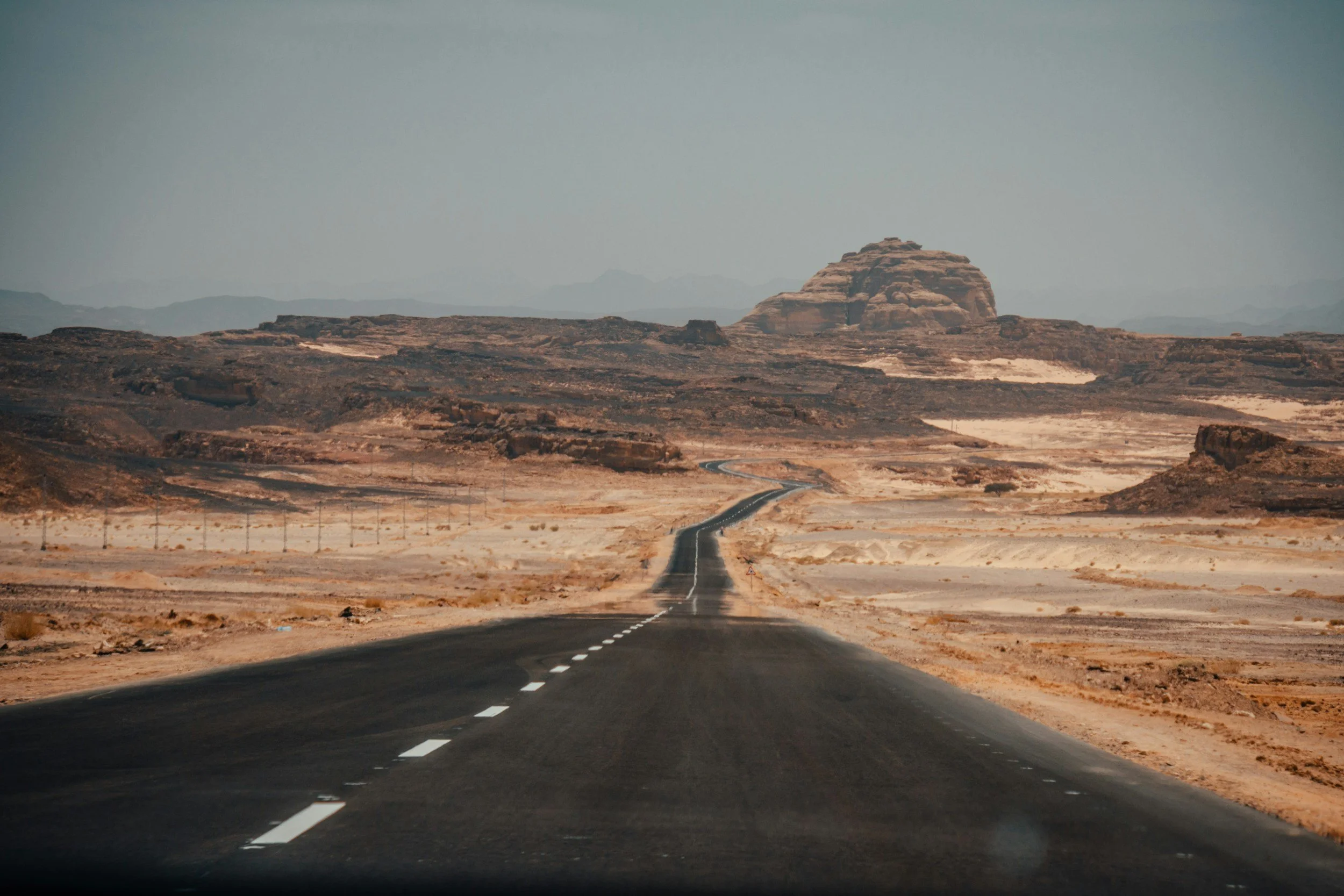
The journey follows a well-maintained highway that cuts through the Sinai’s interior. The first stretch passes low granite and sandstone mountains near Sharm El Sheikh, then moves into long, open desert flats with wide horizons. The landscape is quiet and minimal — subdued colors, low ridges, and occasional Bedouin settlements appearing at a distance. As you approach Cairo, the scenery shifts again: desert plains give way to outer districts, cultivated land near the Nile Valley, and finally the structured density of the capital.Arrival in Cairo
Upon reaching the capital, settle into your hotel for a relaxed evening. The time is yours — whether to rest, enjoy dinner, or simply let the experiences of the oasis and desert settle in.Meals: Breakfast
Overnight: Cairo
Visits: — -
Overview
Your last morning in Egypt is kept calm and unhurried. After days of exploring this country — its history, landscapes, food, people, and the rhythm that connects ancient tradition with modern life — this is the moment to simply take in what the journey has meant. The departure is structured to give you space to reflect, settle, and carry the experience with you as you leave.Itinerary
Private Transfer to Cairo International Airport
After breakfast, your driver meets you for your airport transfer. The transition is clear, organized, and smooth — a quiet close to your time in Egypt and a steady beginning to your onward travels.Meals: Breakfast
Overnight: —Visits: —
THE ROUTE ON THE MAP
Important NoteDesert routes may change due to weather, road conditions, or safety considerations. Your guide will make adjustments only when necessary, ensuring your comfort and safety while preserving the essence and highlights of the itinerary.
INCLUSIONS
GUIDING & EXPERTISEPrivate English-Speaking Egyptologist Guide
Local Sinai mountain guide for the Mount Sinai ascent
Local Specialist Guide for Mount Sinai ascent and St. Catherine area
TRANSPORTATION & LOGISTICSDedicated private driver throughout the journey
All transfers in a private air-conditioned vehicle, including airport arrivals and departures
4×4 vehicles for all off-road travel
ACCOMMODATION & STAY OVERVIEW4 nights in Cairo
5-star hotel
Bed & Breakfast1 night in St. Catherine
Mountain lodge
Half Board2 nights in Sharm El Sheikh
5-star Red Sea resort
Bed & Breakfast
MEALS & CULINARY INCLUSIONSMeals are included as outlined in the itinerary
SELECTED HOTELS — CAIROHilton Ramses
Hilton Pyramids Golf
Sofitel Cairo Downtown Nile
Fairmont Nile City
Steigenberger Pyramids Cairo
Steigenberger Hotel El Tahrir
SELECTED HOTELS — SHARM EL SHEIKHSierra
DoubleTree by Hilton
Sharks Bay Resort
Grand Rotana Resort & Spa
The Grand Hotel
SELECTED DESERT & MOUNTAIN LODGESSt. Catherine: mountain lodge
ACCESS & SERVICESEntrance fees to all archaeological sites and museums mentioned in the itinerary
Bottled water is provided during all guided tours and private transfers
All service charges and government taxes
A Note on Accommodation Availability One property from this curated selection will be confirmed for your journey. Final placement is subject to availability, ensuring that your experience always aligns with our rigorous standards for comfort and character.
OPTIONAL ADD-ONS
CAIRO: NILE DINNER CRUISEAn evening cruise on the Nile aboard a motorized dinner vessel. The route provides a view of the illuminated Cairo skyline and includes a multi-course set dinner. The experience also features live cultural entertainment, such as traditional Egyptian folk music and dance performances.
CAIRO: FELUCCA SUNSET SAILA late-afternoon sail on the Nile via a traditional felucca, a wooden vessel powered solely by the wind. The boat is equipped with cushioned seating and operates without a motor. The route provides a view of the Cairo skyline and the urban riverfront during the sunset hours.
GIZA: PYRAMID SOUND & LIGHT SHOWA nighttime presentation at the Giza Pyramids, combining narration, projections, and illuminated views of the monuments. A structured, accessible way to experience the plateau after dark, with seating and clear storytelling about the site’s history.
RAS MOHAMMED NATIONAL PARKA guided boat excursion to the Red Sea’s marine landscapes, focusing on vibrant coral reefs and sheltered lagoons. The area is characterized by high water clarity. The activity is structured to be accessible for both experienced snorkelers and beginners, with professional guidance provided throughout the experience.
EXCLUSIONS
INTERNATIONAL TRANSITAll international flights to and from Egypt. This itinerary commences upon arrival at your designated Egyptian gateway and concludes with your international departure.
NATIONAL ENTRY & VISA FORMALITIESThe entry visa is the responsibility of the traveler and may be obtained online in advance (where eligible) or upon arrival.
Pre-arrival guidance is shared in advance. Visa and passport formalities are completed within the immigration hall, after which you will be met at the terminal exit.
For a fully managed arrival, with visa issuance and passport formalities handled on your behalf inside the restricted zone by a dedicated airport concierge, please refer to our VIP Fast-Track Arrival upgrade.
PERSONAL PROTECTIONComprehensive travel and medical insurance.
ELECTIVE EXPERIENCESSupplementary site visits, optional excursions, or personal expenditures not specifically detailed in the itinerary.